If you’re looking up qipao because of a school cultural day, Lunar New Year, a wedding invite, or family photos, you’re not alone.This guide helps you understand what it is, why “cheongsam” shows up, how the style changed, and how to choose one that looks right and feels comfortable.You’ll also get a few kid-friendly talking points so your child can explain what they’re wearing without freezing up.
What is a qipao, and why do people say “cheongsam”?
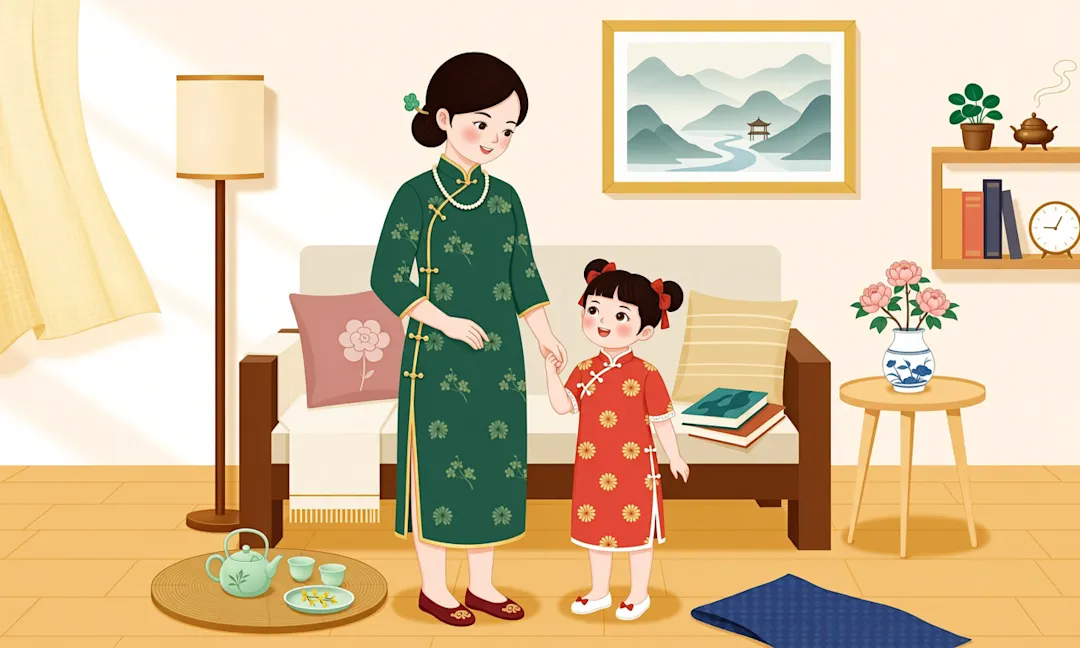
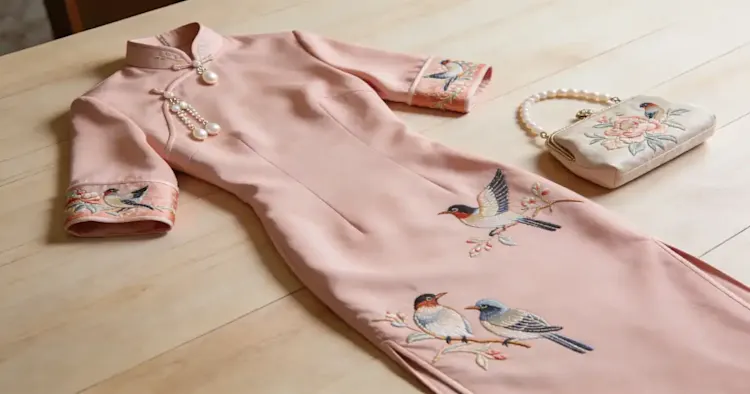
A qipao is a fitted one-piece dress most people associate with Chinese fashion—standing collar, side slits, and those distinctive knotted buttons (often called frog closures). It’s also commonly called cheongsam, especially in Cantonese-speaking communities and in older English usage.
Here’s the part that clears up a lot of confusion:
“Qipao” is the Mandarin term you’ll see in many modern searches and mainland China contexts.
“Cheongsam” is widely used in Hong Kong/overseas contexts and in fashion/museum labeling.
If you’re writing invitations, school notes, or captions and you want to be safe, this phrasing works well: “qipao (cheongsam)”. It catches both terms, and nobody has to feel corrected.
How qipao evolved (the short version that isn’t boring)
Fashion history can turn into a swamp. Dates, decades, lots of “influences.” So let’s do this in a way that helps you make decisions in 2026.
The simple evolution story
Early versions were often looser, more like a long garment rather than a body-hugging silhouette.
Over time—especially in big cities and style-forward circles—the cut became more fitted and the design more varied.
The look we picture today (sleek lines, fitted waist, higher collar) is only _one_ chapter in a longer story.
Why it matters: because when you’re shopping, you’ll see styles labeled “traditional,” “Shanghai style,” “modern,” “daily wear,” “vintage inspired”… and they’re not always consistent. The evolution explains why.
How a qipao should fit: the 60-second fit check
Let’s talk fit, because fit is where most first-time buyers get stuck. A dress can be gorgeous on a hanger and suddenly… weird on a body. It happens.
A qipao is usually meant to skim the body—clean lines—but not to the point where you’re holding your breath. If you feel pinned, it’s not a “you problem.” It’s a cut/size problem.
The 60-second fit check
Stand normally. Don’t suck in. (I know. We all do it.)
Collar: Can you turn your head comfortably? If the collar pushes into your jaw or throat, it’ll annoy you all day.
Bust: No pulling across the chest. If the fabric forms diagonal stress lines, it’s too tight or the bust shaping is wrong.
Waist + stomach area: You should be able to sit without the dress riding up dramatically.
Hips: You should walk without the side slits snapping open like a curtain in the wind.
Armholes / sleeves: Raise your arms as if you’re helping a child into a car seat. If it bites, you’ll hate it.
Quick measuring basics (good enough for most families)
Measure bust, waist, hips with a soft tape.
Compare to the brand’s chart, but also check if they list garment measurements vs body measurements (they’re not the same).
If you’re between sizes and it’s not custom-tailored, sizing up is often easier. You can take in; letting out is harder.
Prioritize movement. A dress that “photographs well” but makes a child stiff and cranky… that’s not worth it. You’ll see it in every photo anyway.
Fabrics that work in real life (and how not to ruin them)
People love to say “silk” because it sounds luxurious. But in real life—school events, dinners, kids hugging you, someone spilling something—your fabric choice is about _stress level_, not just beauty.
Common fabric options (what they feel like in practice)
Silk: Breathable, elegant, can drape beautifully. Also more delicate and higher maintenance.
Satin (including polyester satin): Shiny, often more affordable, sometimes less breathable. Can snag.
Brocade / jacquard-style weaves: Structured, patterned, often “special occasion” feel. Can be warmer.
Cotton/linen blends: More casual, easier to move in, great for daytime or “modern daily” styles.
A practical rule of thumb
If this is for:
School cultural day / daytime event: pick comfort and movement first.
Dinner / photos / formal events: you can go dressier, but still test sitting and walking.
Care basics (so you don’t ruin it)
Steaming is often safer than ironing, especially for delicate fabric.
Store it hanging (if fabric allows), and avoid crushing the collar area.
If you’re not sure, don’t experiment with random washing methods the night before an event. That’s how disasters are born.
If your child wants to say more than “it’s a dress,” a little language structure helps—especially for bilingual kids who understand but hesitate to speak.Try a LingoAce trial class so a teacher can help your child describe cultural topics (clothing, holidays, family) in age-appropriate Chinese—without making it feel like homework.

Details that quietly signal quality
Here’s where you can sound like you know what you’re doing—without being snobby about it.
A well-made dress usually “behaves” in a certain way: lines match up, closures feel secure, the collar sits cleanly, and the finishing looks intentional.
Two-minute quality check (in-store or when your package arrives)
Piping / edging lines: Are they smooth, even, and consistent? Wobbly piping is a red flag.
Pattern alignment: If the fabric has a pattern, do the seams line up reasonably? (Perfect alignment costs money; but it shouldn’t look chaotic.)
Closures (frog buttons / pankou): Do they feel secure? Are they sewn neatly?
Inside finish: Check seams. If threads are everywhere, it may not hold up.
Collar structure: A collar that collapses or twists can make the whole look feel off.
You don’t need perfection. You need “solid enough that you’re not anxious.”
How to wear it well (without feeling costume-y)
This is the section people read slowly. Because they’re picturing themselves in it. Or their child.
The easiest way to avoid a costume vibe is to keep the styling simple and modern. Let the dress be the point.
Shoes
Minimal shoes work best: simple flats, low heels, clean sneakers for casual modern styles (yes, sometimes sneakers are fine).
Avoid overly themed accessories unless you genuinely love them and feel comfortable. If you feel like you’re “playing a part,” you’ll look like it.
Hair + jewelry
Hair can be modern. It doesn’t need to match a movie scene.
Jewelry: one or two pieces. If the fabric is busy (brocade), go quieter.
Occasion quick guide (because parents love clarity)
Lunar New Year / family dinner: classic colors and patterns work well; comfort still matters because you’ll be sitting, eating, moving around.
Weddings: think about your role (guest vs close family). When in doubt, avoid anything that reads as bridal.
School events: keep it age-appropriate and easy to move in.
Photoshoots: you can go more dramatic, but still test walking and sitting. Photos are not worth discomfort.
FAQ
1) What is the difference between qipao and cheongsam?
In many everyday contexts, people use them to refer to the same style of dress. “Qipao” is the Mandarin term you’ll see often in modern searches; “cheongsam” is commonly used in Cantonese/overseas contexts. If you’re unsure, “qipao (cheongsam)” is a safe label.
2) How do I measure for a qipao size at home?
Measure bust, waist, and hips with a soft tape while standing naturally. Compare to the brand chart and check whether they list body measurements or garment measurements. If between sizes and it’s not custom-made, consider sizing up to reduce return risk.
3) Are qipaos supposed to be tight?
They’re usually meant to be fitted, but not restrictive. If you can’t turn your head comfortably, sit normally, or walk without tugging, the fit is too tight or the cut isn’t right for your shape.
4) What fabric is best for a qipao in summer or winter?
For warmer weather, breathable fabrics or lighter blends tend to feel better, especially for kids. For cooler seasons or more formal events, structured fabrics (like brocade-style weaves) can look beautiful but may feel warmer—always test comfort and movement.
5) Can non-Chinese people wear a qipao respectfully?
Often, yes—especially when it’s worn thoughtfully, without stereotypes, and with a simple respectful explanation if asked. Context matters (school events, weddings, cultural celebrations) and so does presentation.
Conclusion
A good qipao choice in 2026 comes down to three things: understand the naming, pick a fit you can live in, and style it simply so it feels modern and confident. The history matters, but you don’t need a dissertation to wear it well. And if this is for your child, the win isn’t just the outfit—it’s your child being able to say one calm sentence about what they’re wearing.
If you want your child to go from “I don’t know how to explain it” to “I can talk about it,” a little guided language practice helps more than most parents expect.Book a LingoAce trial class and let a teacher guide your child through simple, real-life Chinese—cultural topics included—so they can speak with confidence at school and at home.