
If your child already smiles at English sayings like “hit the books” or “spill the beans,” they’re ready for Chinese chengyu.
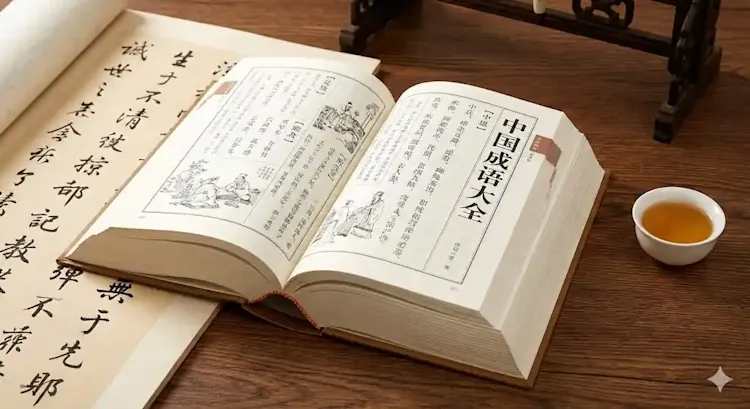
Chinese chengyu (成语 chéngyǔ) are short four-character idioms. Many come from stories, history or everyday life. For kids, they’re:
a quick way to sound more natural in Mandarin,
a doorway into Chinese culture,
and a fun tool for talking about home, school and feelings.
Of course, there are thousands of chengyu out there. Your child doesn’t need to learn them all. That’s why this 2026 guide keeps it realistic: 100 must-know Chinese chengyu, carefully chosen for kids and teens,you can use at home or share with your child’s teacher.
We’ve grouped everything into four clear sections:
Everyday life & family talk
School, study habits & growth
Feelings, friendships & social situations
Character, values & life lessons
You can treat this list like a menu. Pick what fits your child right now and leave the rest for later.
How to use this 100 chengyu list (and the PDF)
Before diving into the idioms, a quick game plan:
Start tiny. Choose 5–10 chengyu that match your child’s age and personality. Stick with those for a while.
Tie idioms to real moments. Use them during homework, chores, playtime, bedtime chats. The more specific the moment, the better the phrase sticks.
Mix Chinese and English. Say the chengyu in Chinese, explain in simple English, let your child answer in whichever language they’re comfortable with.
Share the PDF with teachers. If your child learns with a platform like LingoAce, send the PDF to their teacher. They can weave the same chengyu into stories, dialogues and games in class.
Now let’s look at the four sections.
Section 1: Everyday life & family talk (for home use)
These are the “household chengyu” you can use around the kitchen table, in the car, or during the evening rush. They’re concrete and easy to act out, which makes them great for younger learners.
A few everyday chengyu in table form
Chengyu | Pinyin | Simple meaning | How you might use it |
马马虎虎 | mǎ mǎ hū hū | careless, sloppy | Talk about messy homework or rushed chores |
一心一意 | yī xīn yī yì | with full focus | Before a task: “Let’s do this 一心一意.” |
三心二意 | sān xīn èr yì | distracted | When your child keeps switching tasks |
画蛇添足 | huà shé tiān zú | ruin by overdoing | When they over-decorate a project |
雪中送炭 | xuě zhōng sòng tàn | help in real need | Praise them for sharing at the right time |
You can already imagine small scenes:
“今天有点马马虎虎,我们明天试试一心一意,好不好?” “你刚刚雪中送炭,弟弟真的很需要那支铅笔。”
More everyday chengyu (as a quick list)
These work well in the same home-life context:
井底之蛙 (jǐng dǐ zhī wā) – someone with a narrow view
对牛弹琴 (duì niú tán qín) – talk to the wrong audience
笨鸟先飞 (bèn niǎo xiān fēi) – start early if you’re slower
助人为乐 (zhù rén wéi lè) – find joy in helping others
一举两得 (yī jǔ liǎng dé) – kill two birds with one stone
熟能生巧 (shú néng shēng qiǎo) – practice makes you skilful
小心翼翼 (xiǎo xīn yì yì) – very careful
手忙脚乱 (shǒu máng jiǎo luàn) – flustered and rushed
欢天喜地 (huān tiān xǐ dì) – extremely happy
一清二楚 (yī qīng èr chǔ) – clear as day
一模一样 (yī mú yī yàng) – exactly the same
有条不紊 (yǒu tiáo bù wěn) – very organized
一干二净 (yī gān èr jìng) – completely clean
心满意足 (xīn mǎn yì zú) – fully satisfied and content
多姿多彩 (duō zī duō cǎi) – colorful and varied
其乐融融 (qí lè róng róng) – warm, happy family feeling
迫不及待 (pò bù jí dài) – can’t wait
七嘴八舌 (qī zuǐ bā shé) – everyone talking at once
手舞足蹈 (shǒu wǔ zú dǎo) – dancing with joy
You don’t have to introduce all of these in one go. Pick two or three that fit your child’s current habits—maybe 马马虎虎 / 一心一意 for a “messy but bright” kid—and just keep coming back to them for a few weeks.
Section 2: School, study habits & growth mindset
Now we move into chengyu that describe effort, focus and long-term growth. These are perfect for school-age kids who already have homework, projects and maybe a few exams in sight.
Study and learning chengyu (small table)
Chengyu | Pinyin | Simple meaning | How you might use it |
持之以恒 | chí zhī yǐ héng | keep going steadily | Talk about sticking to a weekly plan |
半途而废 | bàn tú ér fèi | give up halfway | Discuss why finishing matters |
亡羊补牢 | wáng yáng bǔ láo | fix mistakes in time | After a low score: “It’s okay, we 亡羊补牢 now.” |
水滴石穿 | shuǐ dī shí chuān | tiny effort, big result | Explain the power of daily practice |
温故知新 | wēn gù zhī xīn | review to learn new | Before revising old vocabulary |
More school & growth chengyu (as a list)
These idioms come up naturally when talking about homework, projects and revision:
锲而不舍 (qiè ér bù shě) – never give up
全神贯注 (quán shén guàn zhù) – fully focused
开卷有益 (kāi juàn yǒu yì) – opening a book is always useful
取长补短 (qǔ cháng bǔ duǎn) – learn from others’ strengths
举一反三 (jǔ yī fǎn sān) – learn one, apply it to more
一劳永逸 (yī láo yǒng yì) – one big effort for long-term ease
聚精会神 (jù jīng huì shén) – highly concentrated
争分夺秒 (zhēng fēn duó miǎo) – race against time
学无止境 (xué wú zhǐ jìng) – learning never ends
日积月累 (rì jī yuè lěi) – a little every day adds up
一丝不苟 (yī sī bù gǒu) – meticulous, careful
劳逸结合 (láo yì jié hé) – balance work and rest
三思而行 (sān sī ér xíng) – think before you act
事半功倍 (shì bàn gōng bèi) – smarter work, better results
学以致用 (xué yǐ zhì yòng) – use what you learn
只争朝夕 (zhǐ zhēng zhāo xī) – make good use of each day
发奋图强 (fā fèn tú qiáng) – work hard to improve
孜孜不倦 (zī zī bù juàn) – never tired of learning
精益求精 (jīng yì qiú jīng) – always polishing and improving
百闻不如一见 (bǎi wén bù rú yī jiàn) – seeing is believing
A simple way to use this section is to pick a “study chengyu of the week”. Write it on a sticky note by your child’s desk, use it in sentences a few times, and on the weekend ask: “这周,哪一件事情最像 持之以恒?”
How LingoAce fits into this (right in the middle of your routine)
At home, you can plant these idioms in daily life. In class, a good teacher can help them grow.
In LingoAce small-group or 1-on-1 lessons, teachers can:
choose a few chengyu that match your child’s level from this list,
build short stories or dialogues around them,
and encourage kids to actually use the idioms in speaking and writing, not just recognise them on paper.
For example, a LingoAce teacher might:
tell a mini story that ends with 亡羊补牢,
ask your child to retell it in their own words,
then guide them to use 亡羊补牢 and 持之以恒 when talking about their own study habits.
If you’re not sure where to begin, you can bring this article (or the PDF) into a trial lesson and simply say:
“These are the chengyu we’d like to focus on this month. Can you build some activities around them?”
That way home practice and online lessons reinforce each other, instead of feeling like separate worlds.

Section 3: Feelings, friendships & social situations
Growing kids don’t just need vocabulary for objects and actions. They also need words for feelings, friendships, arguments and mixed emotions. The idioms below are great for those slightly deeper conversations.
A few emotion & friendship chengyu in table form
Chengyu | Pinyin | Simple meaning | How you might use it |
将心比心 | jiāng xīn bǐ xīn | put yourself in others’ shoes | Talk about a conflict with friends |
自相矛盾 | zì xiāng máo dùn | contradict yourself | When words and actions don’t match |
喜出望外 | xǐ chū wàng wài | happily surprised | Unexpected good news or results |
心平气和 | xīn píng qì hé | calm and reasonable | Cooling down after a fight |
志同道合 | zhì tóng dào hé | share the same values | Describe close, like-minded friends |
More chengyu for feelings and social life
These can help you describe all those “in-between” moments:
话中有话 (huà zhōng yǒu huà) – there’s a hidden message
忍无可忍 (rěn wú kě rěn) – can’t stand it anymore
如释重负 (rú shì zhòng fù) – feel a weight lifted
珍惜时间 (zhēn xī shí jiān) – treasure time
不约而同 (bù yuē ér tóng) – agree without planning
入乡随俗 (rù xiāng suí sú) – when in Rome, do as the Romans do
半信半疑 (bàn xìn bàn yí) – half-believing, half-doubting
因小失大 (yīn xiǎo shī dà) – lose a lot over something tiny
眼高手低 (yǎn gāo shǒu dī) – big goals, not enough skill yet
患难见真情 (huàn nàn jiàn zhēn qíng) – true friends show up in hard times
同舟共济 (tóng zhōu gòng jì) – in the same boat, helping each other
斤斤计较 (jīn jīn jì jiào) – fuss over small things
心花怒放 (xīn huā nù fàng) – overjoyed, flowers blooming in your heart
心直口快 (xīn zhí kǒu kuài) – very straightforward, speaks without filtering
小题大做 (xiǎo tí dà zuò) – make a big deal out of a small issue
自作自受 (zì zuò zì shòu) – you made this mess, you live with it
口是心非 (kǒu shì xīn fēi) – say one thing, feel another
童言无忌 (tóng yán wú jì) – children speak freely, without filter
见义勇为 (jiàn yì yǒng wéi) – act bravely when something is clearly right
通情达理 (tōng qíng dá lǐ) – reasonable and understanding
With older kids, you can gently ask:
“如果用一个成语来形容你今天在学校的感觉,你会选哪一个?”
The idea isn’t to quiz them. It’s to give them language they can lean on when feelings get complicated.
Section 4: Character, values & life lessons
The last group zooms out to the “bigger picture”: what kind of person your child is becoming. These chengyu are perfect for stories, reflection and quiet bedtime talks.
Character & values chengyu (small table)
Chengyu | Pinyin | Simple meaning | How you might use it |
勤奋好学 | qín fèn hào xué | diligent and eager to learn | Praise steady effort over time |
乐于助人 | lè yú zhù rén | happy to help others | Talk about kindness as a habit |
一诺千金 | yī nuò qiān jīn | a promise worth gold | Stress keeping one’s word |
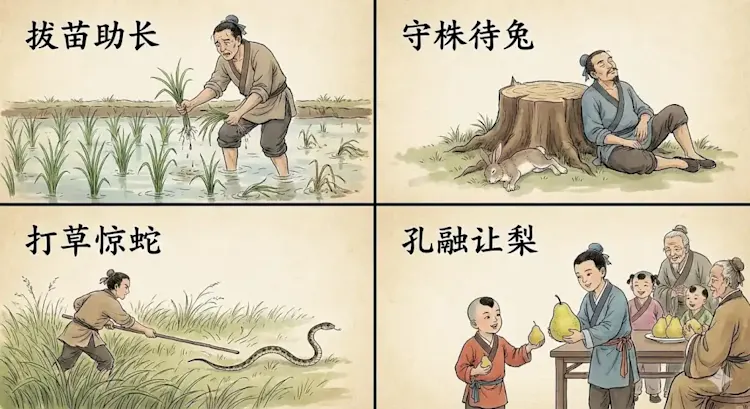
守株待兔 | shǒu zhū dài tù | wait lazily for luck | Explain why effort beats waiting |
迎难而上 | yíng nán ér shàng | face challenges head-on | Encourage trying difficult tasks |
More chengyu about who we are and who we want to be
言而无信 (yán ér wú xìn) – say things but don’t keep your word
言传身教 (yán chuán shēn jiào) – teach by words and by example
身体力行 (shēn tǐ lì xíng) – personally practise what you preach
见多识广 (jiàn duō shí guǎng) – have wide knowledge and experience
百折不挠 (bǎi zhé bù náo) – never give up, no matter how many setbacks
见风使舵 (jiàn fēng shǐ duò) – change sides with the wind
见怪不怪 (jiàn guài bù guài) – nothing surprises you anymore
独一无二 (dú yī wú èr) – one of a kind, unique
生龙活虎 (shēng lóng huó hǔ) – full of energy, like a little tiger
大公无私 (dà gōng wú sī) – fair and selfless
天真无邪 (tiān zhēn wú xié) – innocent and pure
心灵手巧 (xīn líng shǒu qiǎo) – clever and good with hands
百发百中 (bǎi fā bǎi zhòng) – hit the target every time
百看不厌 (bǎi kàn bù yàn) – never get tired of watching
自强不息 (zì qiáng bù xī) – keep improving yourself, never stop
自立自强 (zì lì zì qiáng) – stand on your own feet and grow
改过自新 (gǎi guò zì xīn) – correct mistakes and start fresh
狐假虎威 (hú jiǎ hǔ wēi) – bully others using borrowed power
鹬蚌相争 (yù bàng xiāng zhēng) – two sides fight and both lose
守望相助 (shǒu wàng xiāng zhù) – watch out for and help each other
You don’t need to turn these into a lecture. Pick one that fits a story you’re reading together, or something that happened at school, and just drop it into the conversation. Kids remember the phrase much better when it’s attached to a very specific moment.
Turning a list into real language (without turning it into extra homework)
By now you’ve seen all 100 must-know Chinese chengyu we recommend for kids and families. To make sure this list actually gets used, not just saved:
Choose one chengyu for the dinner table each day. Everyone tries to use it once.
Let your child pick one idiom per week and draw a comic or storyboard for it.
Use the PDF as a flexible toolbox: print a page for “everyday”, another for “study”, maybe one more for “friendship”, and rotate them.
Share the PDF with your child’s LingoAce teacher (or any tutor) and ask them to build a short story or writing task around 2–3 of the idioms.
Bit by bit, these four-character phrases stop feeling like “extra vocabulary” and start becoming the way your child naturally talks about their life—in Chinese.
If you’d like to see how a professional teacher can turn this list into live stories, games and speaking practice, you can always try a LingoAce trial class. Take a handful of idioms from this guide, bring them into class, and watch how they come alive when someone uses them in real time with your child.