If your child’s Mandarin sounds like this…“I like it. I go. I eat. I’m happy”.It’s not because they “don’t know enough Chinese.” Most of the time, they know plenty of words. What they’re missing is the glue: those small connectors that turn short sentences into real thought.
That’s what chinese conjunction words do. They help kids explain reasons, show contrast, add details, make choices, and tell longer stories without sounding like they’re reading flashcards out loud. Learners (kids and adults) also tend to get a big “fluency jump” once they stop relying on only and / but / because and start rotating a few natural patterns.
What are chinese conjunction words?
In plain terms, chinese conjunction words are words (or short phrases) that connect ideas.
Sometimes they connect two words: “A and B”
Sometimes they connect two clauses (two mini-sentences): “Because A, so B”
Sometimes they connect a whole paragraph of logic: “In short…” “On the other hand…”
One confusion that pops up a lot: people use “conjunctions,” “connectors,” and “linking words” interchangeably. That’s fine for everyday use. If you want a practical distinction as a parent:
Conjunctions: often link clauses or show a relationship (cause, contrast, condition).
Connectors / linking words: broader bucket; includes “in fact,” “for example,” “in summary.”
If your child is learning Mandarin for real life (talking to family, telling stories, writing school assignments), you want them to own a small set of connectors they can actually use—not a long list they recognize but never say.
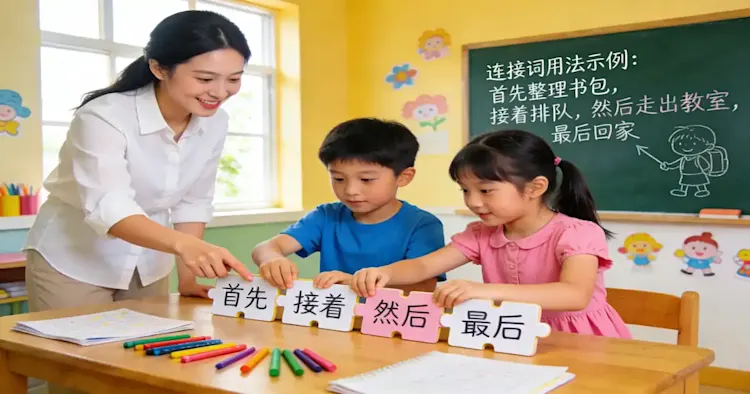
The 6 meaning buckets of chinese conjunction words
Instead of memorizing alphabetically (which is… cruel), it helps to group chinese conjunction words by what your kid is trying to do.
1) Cause → effect (reason, result)
Use these when your child is explaining “why” and “what happened because of it.”
Core words/pairs:
因为…所以… (because…so…)
因为 (because)
所以 (so/therefore)
因此 / 所以说 (more “therefore,” can feel a bit more formal)
Kid-safe examples:
因为我忘了带水,所以我很渴。
我今天不去公园,因为下雨了。
2) Contrast (but, however, even though)
Use these when the second part of the sentence “turns” from the first part.
Core words/pairs:
虽然…但是… / 虽然…可是… (although…but…)
但是 / 可是 (but)
不过 (but/however; very common in speech)
Kid-safe examples:
虽然我不想写作业,但是我会写完。
我想去,不过我有点累。
3) Condition (if…then…, as long as…)
This is the “rules and routines” bucket. Parents use it constantly without realizing it.
Core words/pairs:
如果…就… (if…then…)
要是…就… (if…then…, more casual)
只要…就… (as long as…then…)
Kid-safe examples:
如果你收好玩具,就可以看电视。
只要你练十分钟,就会更顺。
4) Addition (and also, not only…but also)
Use these when your child is adding another point (especially in storytelling).
Core words/pairs:
而且 (and also; “plus” with emphasis)
还有 (and also; very kid-friendly)
不但/不仅…而且/还… (not only…but also…)
Kid-safe examples:
他会游泳,而且跑得很快。
她不仅会说中文,还会写汉字。
5) Choice (or, either…or…)
When kids start making choices in longer sentences, their Mandarin suddenly sounds older.
Core words/pairs:
或者 (or)
要么…要么… (either…or…)
不是…就是… (either…or…, slightly different vibe: “it’s either X or Y”)
Kid-safe examples:
我们要么走路,要么坐车。
今天不是爸爸做饭,就是妈妈做饭。
6) Summary / emphasis (in short, especially, in fact)
These are great for older kids and for writing.
Core words:
总之 (in short)
特别是 (especially)
其实 (actually / in fact)
Kid-safe examples:
其实我不是不想去,我是有点紧张。
总之,我们先把这件事做完。
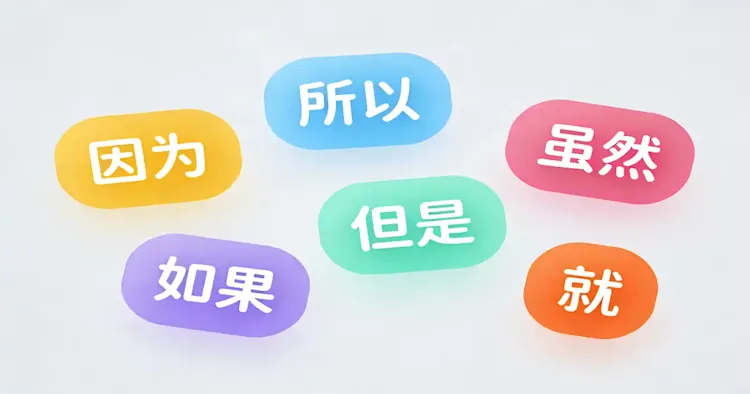
The “paired pattern” shortcuts kids learn fastest with chinese conjunction words
Paired patterns are popular for a reason: they feel like Lego. Once kids learn the frame, they can swap in new vocabulary without re-learning the grammar every time.
因为…所以… (because…so…)
This is the basic cause-effect structure. It’s correct, common, and yes—sometimes one half can be dropped in casual speech.
Parent-friendly rule of thumb:
If your child is still building structure, teach the full pair first.
Later, let them drop 因为 or 所以 when it sounds natural.
Examples:
因为我迟到了,所以我跑得很快。
我跑得很快,因为我迟到了。
我迟到了,所以我跑得很快。
虽然…但是… (although…but…)
In English, “although…but” is usually wrong. In Mandarin, it’s often the default pattern.
Examples:
虽然今天很冷,但是我还是想出去。
虽然他很小,可是他说得很清楚。
如果…就… (if…then…)
This pattern is your parenting superpower in Chinese. It’s also a clean way to teach logic.
Examples:
如果你现在开始,就不会太赶。
如果你写完作业,就可以玩。
不仅…还… / 不但…而且… (not only…but also…)
This makes kids’ speech and writing sound instantly more advanced, even with simple words.
Examples:
她不仅会唱歌,还会弹钢琴。
他不但跑得快,而且很有耐心。
Save-this moment: if you only teach three paired patterns from this whole guide, teach these: 因为…所以… / 虽然…但是… / 如果…就…
They cover a huge chunk of everyday conversation, school speaking tasks, and story retelling.
If your child can say these connectors in drills but still freezes in real conversation, that’s normal. The missing piece is often live correction and guided repetition in context—someone hears the sentence, nudges the word order, then gets your child to say it again without stress.That’s one reason many families try a LingoAce trial class before committing: it’s an easy way to see whether your child responds better with a teacher guiding real speaking practice .

Spoken vs formal chinese conjunction words
A lot of frustration comes from teaching the “bookish” connector first, then wondering why it doesn’t show up in real speech.
Here’s a simple way to prioritize chinese conjunction words:
Start with these for home conversation
但是 / 可是 / 不过 (but)
因为 / 所以 (because / so)
如果…就… (if…then)
还有 / 而且 (also)
Why? Kids hear them often. They’re short. They’re reusable. They don’t require a “special writing tone.”
Add these for writing and more formal speaking
因此 / 由于…因此… (therefore / due to…therefore…)
然而 (however; more formal)
总之 (in short)
You can absolutely teach “formal” connectors. Just don’t start there unless your child is already writing paragraphs in Chinese and wants variety.
One more thing: learners become more fluent when they start predicting what comes next in a sentence—“I heard 因为, so a reason is coming; I might hear 所以 next.” That active listening trick shows up in modern learning advice for Chinese connectors and is surprisingly effective.
Quick-reference table: chinese conjunction words by function
Function | Conjunction(s) | Kid-safe frame | Example (CN) | English hint |
Cause → effect | 因为…所以… / 因为 / 所以 | 因为 A,所以 B | 因为我晚睡了,所以我很困。 | Because I slept late, so I’m tired. |
Contrast | 虽然…但是… / 可是 / 不过 | 虽然 A,但是 B | 虽然下雨,但是我们还想出去。 | Although it’s raining, but we still want to go out. |
Condition | 如果…就… / 只要…就… | 如果 A,就 B | 如果你练习,就会更好。 | If you practice, then you’ll get better. |
Addition | 而且 / 还有 / 不仅…还… | 不仅 A,还 B | 她不仅会说,还会写。 | Not only can she speak, she can also write. |
Choice | 或者 / 要么…要么… | 要么 A,要么 B | 要么现在走,要么等十分钟。 | Either we leave now, or we wait ten minutes. |
Summary/Emphasis | 总之 / 其实 / 特别是 | 总之…… | 总之,我们先做最重要的。 | In short, let’s do the most important thing first. |
FAQ
1) What are the most common chinese conjunction words for beginners?
A strong beginner set is: 因为 / 所以, 但是 / 可是 / 不过, 如果…就…, 还有, 而且. Add 虽然…但是… once your child can comfortably say two clauses.
2) Are chinese conjunction words the same as Chinese linking words or connectors?
In casual learning conversations, yes, people often mean the same thing. Technically, “linking words/connectors” can include broader discourse phrases like 其实 (actually) and 总之 (in short), while “conjunctions” often focus on linking clauses (cause, contrast, condition).
3) Is 因为…所以… always required, or can kids drop one part?
Kids can drop one half in natural speech, especially once they’re comfortable. But for learning structure, start with the full pair, then teach dropping as an “advanced convenience.”
4) Why does Chinese use 虽然…但是… when English avoids “although…but”?
Mandarin commonly pairs them to mark the contrast clearly, especially in learner-friendly and everyday sentences. Many learners notice this difference, and grammar references treat it as a standard pattern.
5) How do I teach chinese conjunction words to kids without drills?
Use real-life routines: “If you finish X, then Y,” bedtime story retell (“Although…, but…”), and “tell me why” games (because/so). Consistency matters more than length—10 minutes a day beats one long weekend session.
Conclusion
If your child already knows vocabulary but still speaks in short, separate sentences, chinese conjunction words are usually the missing bridge. Start by grouping connectors by meaning (cause, contrast, condition), teach a few paired patterns like 因为…所以… and 虽然…但是…, then practice in tiny daily moments where your child actually talks.
If you want faster progress—and less guessing about whether a sentence “sounds right”—a live, guided environment helps. You can book a LingoAce trial class to see how your child handles real-time speaking prompts and whether a teacher-led approach makes conjunction patterns stick more naturally.