Why Mythical Creatures Matter in Chinese Culture?
When children start learning about Chinese culture, mythical creatures often capture their attention before anything else. Dragons fly across the sky. Phoenixes rise from fire. Tigers guard mountains, and strange beasts appear in ancient stories with names that sound mysterious even to native speakers.
These creatures are not just fantasy. In Chinese culture, they are woven into language, art, festivals, and even daily expressions. Understanding them helps learners—especially children—see how stories shape the way people think and speak.
In this article, we explore some of the most important creatures in Chinese mythology. We look at where they come from, what they represent, and why they still matter today. Along the way, you’ll see how mythical creatures can also become a powerful bridge for learning Chinese language and culture.
What Are Creatures in Chinese Mythology?
Creatures in Chinese mythology are legendary beings that appear in ancient texts, folk tales, and traditional beliefs. Some are powerful and kind. Others are strange or dangerous. Many are a mix of real animals and imagination.
Unlike modern fantasy stories, these creatures were not created only for entertainment. They often explained natural events, taught moral lessons, or symbolized important values like wisdom, balance, and respect for nature.
For children learning Chinese, these creatures offer something special: they turn abstract ideas—such as good fortune, courage, or harmony—into stories and images that are easy to remember.
The Chinese Dragon: Power, Wisdom, and Good Fortune
No creature is more famous in Chinese mythology than the dragon (龙, lóng).
Unlike Western dragons, which are often shown as dangerous or destructive, the Chinese dragon is usually a positive symbol. It represents:
Strength and authority
Wisdom and intelligence
Control over water and weather
In ancient times, dragons were believed to bring rain, making them closely connected to farming and survival. Emperors were also associated with dragons, which is why the dragon became a symbol of leadership and responsibility.
For children, learning about the dragon helps them understand why this creature appears so often in Chinese festivals, art, and even everyday language.

The Phoenix: Renewal and Balance
The phoenix (凤凰, fènghuáng) is another important creature in Chinese mythology.
While Western phoenix stories often focus on rebirth through fire, the Chinese phoenix has a broader meaning. It symbolizes:
Peace and harmony
Balance between yin and yang
Renewal and hope
The phoenix is often paired with the dragon. Together, they represent balance—traditionally linked to marriage and harmony between different forces.
For young learners, the phoenix teaches the idea that strength does not always come from power. Sometimes, it comes from balance and grace.
The Tiger: Courage and Protection
In Chinese mythology, the tiger (虎, hǔ) is seen as the king of land animals.
Tigers represent:
Bravery and strength
Protection against evil
Authority and confidence
In folk traditions, tiger images were used to protect children from bad spirits. You can still see tiger symbols in traditional art, clothing, and decorations.
For children, the tiger often becomes a relatable creature. It feels strong but familiar, making it easier to connect stories with emotions like courage and confidence.
The Qilin: Kindness and Good Omen
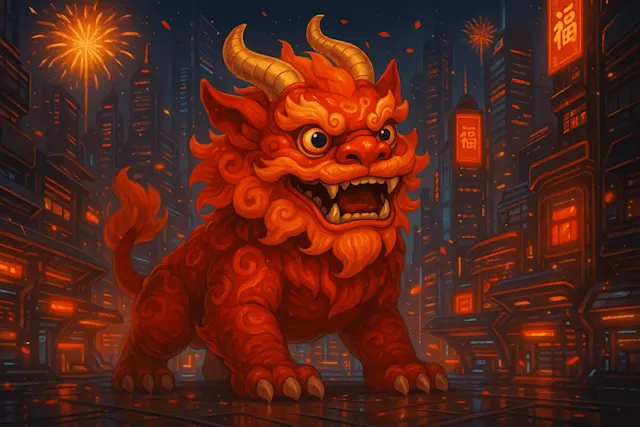
The qilin (麒麟, qílín) is sometimes compared to a unicorn, but it has its own unique meaning in Chinese mythology.
The qilin is described as a gentle creature that appears only during times of peace or when a great leader is born. It represents:
Kindness and compassion
Good fortune
Moral leadership
Unlike many mythical beasts, the qilin avoids harming others. This makes it a powerful symbol of strength guided by kindness.For children learning Chinese, the qilin introduces the idea that true power can be gentle.

Mythical Creatures as Symbols, Not Just Characters
One key difference between Chinese mythology and many modern fantasy stories is symbolism.
Chinese mythical creatures often stand for ideas rather than individual personalities. Dragons stand for power and wisdom. Phoenixes stand for harmony. Tigers stand for protection.
This symbolic thinking shows up in the Chinese language as well. Many idioms, expressions, and cultural references come directly from these myths.
When children learn these creatures, they are also learning how stories influence language.
How These Creatures Appear in Everyday Chinese Culture
Even today, mythical creatures are everywhere in Chinese culture.
You can find them in:
Festivals like Lunar New Year
Traditional paintings and architecture
Children’s stories and cartoons
Common sayings and symbols
For example, dragons appear in New Year dances to bring good luck. Phoenix imagery is often used in weddings or art to symbolize harmony.
Seeing these creatures in real life helps children realize that mythology is not just ancient history—it is still part of daily culture.
Why Mythical Creatures Are Great for Learning Chinese
For children, mythical creatures make learning Chinese more engaging.
They help by:
Turning vocabulary into stories
Making cultural ideas easier to understand
Creating emotional connections with the language
Instead of memorizing words in isolation, children learn them through characters, stories, and images. This makes learning feel more natural and memorable.
Common Misunderstandings About Chinese Mythical Creatures
One common misunderstanding is assuming Chinese mythical creatures are similar to Western fantasy creatures.
In reality:
Chinese dragons are not villains
Mythical creatures often represent values, not battles
Stories focus more on balance than conflict
Understanding these differences helps learners avoid cultural confusion and appreciate the deeper meaning behind the stories.
Using Mythology to Build Cultural Awareness
Learning about creatures in Chinese mythology helps children do more than learn new words.
It helps them:
Understand how stories reflect values
See how culture shapes language
Develop curiosity about different traditions
This cultural awareness makes language learning richer and more meaningful.
Conclusion: Why These Stories Still Matter
Creatures in Chinese mythology are more than legends from the past. They are living symbols that continue to shape Chinese culture, language, and imagination.
For children learning Chinese, these creatures open a door to understanding not just how the language works, but why it works the way it does. Through dragons, phoenixes, tigers, and qilin, learners discover values like balance, responsibility, kindness, and courage.
When language learning includes stories and culture, children don’t just memorize words—they build a connection. And that connection is what helps Chinese learning last.