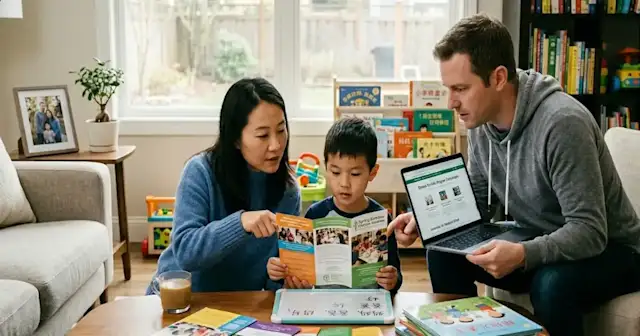
If you’re raising a bilingual kid in family, you’ve probably seen this moment: your child knows the word “dad”… but when grandparents are visiting, or when an auntie asks a question at a family gathering, the words suddenly disappear.
That’s why father in chinese isn’t just vocabulary for heritage learners. It’s connection. It’s how kids step into family life—at the dinner table, on a video call with grandparents, at Lunar New Year, or during a weekend Chinese school “introduce your family” presentation.
This guide will help you teach the right word for the right moment—especially the big confusion: 爸爸(bàba) vs 父亲(fùqīn)—and give you kid-friendly scripts that work in real heritage-family situations.
Father in Chinese: the fastest answer (爸 vs 爸爸 vs 父亲)
Here’s the simplest way to explain it to your child:
爸爸(bàba) = “Dad/Daddy” (everyday, at home, most common for kids)
爸(bà) = short “Dad” (casual, quick, common in speech)
父亲(fùqīn) = “Father” (formal; more common in writing, speeches, or formal introductions—not what kids usually shout across the living room)
A memory line that heritage kids actually remember:
Call dad → 爸爸(bàba)/ 爸(bà)
Talk about father formally → 父亲(fùqīn)
If your child is English-dominant, this distinction matters because they often learn “father” and “dad” as the same word in English—then over-apply the formal Chinese version at home.

Father in Chinese: when to use 爸爸 vs 父亲 (heritage-family situations)
Instead of teaching “formal vs informal” as an abstract rule, teach it by place + person—the way kids actually live.
1) At home (speaking to your own dad)
Use: 爸爸(bàba), 爸(bà)
Why it matters: it sounds natural and warm.
2) With grandparents in the room (a classic heritage scenario)
Kids often get shy here. Give them a safe pattern:
Calling dad: 爸爸(bàba)
Talking about dad to grandparents: 你爸爸(nǐ bàba) / 我爸爸(wǒ bàba)
Example your child can copy:
“Dad is getting the car.” → 我爸在停车(wǒ bà zài tíng chē)。
3) At family gatherings (aunties/uncles asking questions)
This is where kids need “talk-about” forms more than fancy vocabulary.
“Where’s your dad?” → 你爸爸呢(nǐ bàba ne)?
“My dad is over there.” → 我爸在那边(wǒ bà zài nà biān)。
4) Weekend Chinese school / writing homework
This is where 父亲(fùqīn) appears more often—especially in writing prompts, essays, or formal phrasing.
A practical rule:
Speaking at home: 爸爸 / 爸
School writing: may include 父亲, but kids don’t need to use it as a home “Dad!”
5) Filling out school forms in English-speaking environments
Sometimes parents want a more “official” Chinese term for translation contexts. In those cases:
父亲(fùqīn) can fit a formal label
But for kid speech and daily life: keep 爸爸(bàba) as the default
Father in Chinese: 15 ways kids actually say “dad” (with when-to-use notes)
Below are 15 terms you’ll see in heritage-family life. Some are everyday. Some are formal. Some are “teach later.” For each, I’ll tell you what it means, when to use it, why it matters, and a kid-safe example.
Group A: Everyday home words (start here)
爸爸(bàba)
Meaning: Dad / Daddy
Use when: calling dad at home; speaking with relatives
Why it matters: it’s the safest, most common kid choice
Kid example: 爸爸,我回来了(bàba, wǒ huí lái le) — “Dad, I’m back.”
爸(bà)
Meaning: Dad (short form)
Use when: quick calls, casual speech, older kids
Why it matters: kids hear it constantly in real conversation
Kid example: 爸,你看(bà, nǐ kàn)! — “Dad, look!”
老爸(lǎo bà)
Meaning: “Dad” with an affectionate, slightly playful vibe
Use when: older kids/teens; relaxed family tone
Why it matters: helps kids sound less “textbook” as they grow
Kid example: 老爸,你今天忙吗(lǎo bà, nǐ jīn tiān máng ma)? — “Dad, are you busy today?”
Group B: Formal / written “father” words (use for school/writing)
父亲(fù qīn)
Meaning: Father (formal)
Use when: essays, formal speeches, formal labels
Why it matters: kids will meet it in Chinese school materials
Kid example: 我的父亲很努力(wǒ de fù qīn hěn nǔ lì) — “My father works hard.” (Good for writing; not a typical home call.)
父(fù)
Meaning: “father” as a component (seen in 父亲、父母)
Use when: recognizing vocabulary; not commonly said alone by kids
Why it matters: boosts reading confidence for heritage learners
Kid example: “Parents” is 父母(fù mǔ) — helpful for school worksheets.
Group C: Cute / playful (only if your family likes it)
爹地(diē dì)
Meaning: “Daddy” (cute/borrowed style; also seen in Cantonese-influenced families)
Use when: playful tone, some households’ default
Why it matters: kids may hear it from relatives or media
Kid example: 爹地,抱抱(diē dì, bào bào) — “Daddy, hug.”
爸比(bà bǐ)
Meaning: cute “daddy” style (play talk)
Use when: parent-child playful talk; younger kids
Why it matters: if your child already says it, you can leverage it into real phrases
Kid example: 爸比,我们走吧(bà bǐ, wǒ men zǒu ba) — “Daddy, let’s go.”
爸爸呀(bàba ya) / 爸爸啦(bàba la)
Meaning: “Daaad~” with a tone particle (emotion does the work)
Use when: calling gently, whining lightly, playful emphasis
Why it matters: teaches kids that “how you say it” matters in Chinese
Kid example: 爸爸呀,你听我说(bàba ya, nǐ tīng wǒ shuō) — “Dad, listen to me.”
Group D: Regional / old-fashioned / storybook (teach later)
爹(diē)
Meaning: dad/father (old-fashioned or regional; common in historical drama style)
Use when: storytelling, traditional settings, some regional speech
Why it matters: kids will recognize it in books and shows
Kid example: 我爹回来了(wǒ diē huí lái le) — “My dad came back.” (Label it “storybook/drama vibe” so kids don’t overuse it.)
老爹(lǎo diē)
Meaning: “old dad” (old-timey, sometimes humorous)
Use when: very family-specific; not a beginner default
Why it matters: helps kids decode heritage media
Kid example: keep as recognition more than production early on.
阿爸(ā bà)
Meaning: “dad” in some regional/dialect-influenced families
Use when: that’s what grandparents use at home
Why it matters: many heritage households have mixed Mandarin + dialect exposure
Kid example: if grandparents say it, teach your child to respond naturally:
阿爸,我来了(ā bà, wǒ lái le) — “Dad, I’m here.”
Group E: “Talk about dad” forms (the heritage-family superpower)
This is where kids often get stuck: they can call dad, but can’t talk about dad in Chinese when relatives ask questions.
我爸(wǒ bà) — “my dad” (casual, very common)
Use when: answering relatives; everyday speech
Why it matters: makes kids sound natural fast
Kid example: 我爸在厨房(wǒ bà zài chú fáng) — “My dad is in the kitchen.”
我爸爸(wǒ bàba) — “my dad” (fuller, gentle)
Use when: speaking clearly to elders; slower speech
Why it matters: easier for young kids to pronounce than short clipped forms
Kid example: 我爸爸做饭很好吃(wǒ bàba zuò fàn hěn hǎo chī) — “My dad cooks tasty food.”
你爸爸(nǐ bàba) — “your dad”
Use when: kids talking to cousins/friends
Why it matters: unlocks peer-to-peer Chinese conversation
Kid example: 你爸爸在哪里(nǐ bàba zài nǎ lǐ)? — “Where is your dad?”
他爸爸(tā bàba) — “his dad / that kid’s dad”
Use when: describing someone else’s family
Why it matters: helps kids participate in family storytelling
Kid example: 他爸爸很高(tā bàba hěn gāo) — “His dad is tall.”

Father in Chinese: one table to decode every “dad” word fast
This is the part most heritage parents bookmark.
Term | Pinyin | Vibe | Use it when | Kid-safe example |
爸爸 | bàba | warm, default | calling dad at home | 爸爸,我回来了 |
爸 | bà | casual, quick | quick calls | 爸,你看 |
老爸 | lǎo bà | affectionate | older kids/teens | 老爸,你今天忙吗 |
父亲 | fùqīn | formal | writing/speeches | 我的父亲很努力 |
父 | fù | reading component | recognize in 父母 | 父母=parents |
爹地 | diē dì | cute | playful, some families | 爹地,抱抱 |
爸比 | bà bǐ | cute | play talk | 爸比,我们走吧 |
爸爸呀/啦 | bàba ya/la | emotional | emphasis/whine/play | 爸爸呀,你听我说 |
爹 | diē | old-timey | drama/books | 我爹回来了 |
老爹 | lǎo diē | old-timey | niche family humor | (recognize first) |
阿爸 | ā bà | regional | if family uses it | 阿爸,我来了 |
我爸 | wǒ bà | natural speech | answering relatives | 我爸在厨房 |
我爸爸 | wǒ bàba | clear/gentle | speaking to elders | 我爸爸做饭很好吃 |
你爸爸 | nǐ bàba | kid-to-kid | cousins/friends | 你爸爸在哪里 |
他爸爸 | tā bàba | storytelling | describing others | 他爸爸很高 |
Father in Chinese: kid scripts for heritage families (the moments that matter)
If your goal is “my child can actually use Chinese with relatives,” teach scripts tied to the exact situations heritage kids face.
Script 1: Greeting grandparents, then introducing dad
爷爷好(yé ye hǎo)!奶奶好(nǎi nai hǎo)!
这是我爸爸(zhè shì wǒ bàba)。
Why it matters: kids often greet, then go silent. This gives them a second line.
Script 2: Relatives ask “Where’s your dad?”
你爸爸呢(nǐ bàba ne)?
我爸在那边(wǒ bà zài nà biān)。
Optional add-on: 他在停车(tā zài tíng chē)。
Why it matters: it trains “talk about dad” forms (我爸) that unlock real conversation.
Script 3: Weekend Chinese school “introduce your family”
这是我的爸爸(zhè shì wǒ de bàba)。
我爸爸叫___(wǒ bàba jiào ___)。
他很喜欢___(tā hěn xǐ huan ___)。
Why it matters: kids can reuse this in class presentations and family gatherings.
Script 4: Family friend (叔叔/阿姨) small talk
叔叔好(shū shu hǎo)!阿姨好(ā yí hǎo)!
我爸爸在这儿(wǒ bàba zài zhè er)。
Why it matters: respectful greeting + one simple family sentence keeps kids from freezing.
If your child knows the vocabulary but still won’t use it with relatives, you’re not failing—you’re just missing repetition in realistic dialogues. A short weekly routine (role-play a grandparent visit, a Chinese school intro, and a family gathering Q&A) can change everything. If you’d like more structure and gentle pronunciation feedback, a trial class can help—LingoAce is one option heritage families use to practice family scripts in a supportive, kid-friendly way.

Father in Chinese: Cantonese quick box for bilingual households
Many North American heritage families live with two systems: kids learn Mandarin at school, but hear Cantonese (or another dialect) with grandparents. The best “no stress” approach is:
Teach recognition of the Chinese character first (what you see on paper).
Practice one speaking system per setting (Mandarin at Chinese school, Cantonese with grandparents, if that’s your home reality).
Common Cantonese “dad” words you may hear:
老豆 / 老竇 (lou5 dau6) — very common in Cantonese households
爸爸 (baa1 baa1) — also used in many families
爹地 (de1 di4) — “daddy” style, seen in some communities
阿爸 (aa3 baa4) — depending on family/region
You don’t need to force kids to “pick one forever.” You just want them to feel confident and understood in each family context.
Father in Chinese: common mistakes heritage families can avoid quickly
Teaching 父亲 first and expecting it to work at home It’s correct, but it’s formal. Start with 爸爸 / 爸 for speaking, then add 父亲 for writing later.
Only teaching “call dad” and skipping “talk about dad” Heritage kids often freeze when relatives ask questions. Teach 我爸 / 我爸爸 early.
Correcting pronunciation too long in front of relatives That can make kids shut down. Save corrections for practice time; in the moment, praise any attempt.
Teaching 10 rare words before the child can use 3 common ones A small usable set builds confidence faster than a big list.
Not explaining “why” the word changes by setting Kids follow rules better when the reason is simple: “This is how we show respect” or “This is how we sound natural.”
FAQ
1) father in chinese mandarin — What do kids actually call their dad in Mandarin?
Most kids call their dad 爸爸(bàba) or the short form 爸(bà) in everyday speech. 父亲(fùqīn) is usually reserved for formal writing, speeches, or more official contexts rather than daily home address.
2) father in chinese pinyin — What is the pinyin for “dad” vs “father” in Chinese?
Common “dad” pinyin is bàba (爸爸) or bà (爸). The formal “father” is fùqīn (父亲). For heritage learners, it’s useful to learn both, but start with bàba for speaking.
3) father in chinese cantonese — What do Cantonese-speaking families call their father?
Many Cantonese-speaking families use 老豆/老竇 (lou5 dau6), and some also use 爸爸 (baa1 baa1) or 爹地 (de1 di4), depending on household habits. If kids learn Mandarin at school, teach character recognition first, then practice Cantonese forms in the grandparent context.
4) father in chinese character — What Chinese characters are used for “dad” and “father”?
The most common characters are 爸爸 (dad), 爸 (short “dad”), and 父亲 (formal “father”). You’ll also see 父母 for “parents,” where 父 is the “father” component.
Wrap-up: a heritage-family plan that works this week
If your child is English-dominant, success doesn’t come from memorizing 15 words. It comes from mastering a tiny set and using it in the moments that matter.
Here’s the simplest plan:
Teach 爸爸(bàba) and 爸(bà) for calling dad.
Teach 我爸(wǒ bà) and 这是我爸爸(zhè shì wǒ bàba) for family gatherings and Chinese school.
Teach 父亲(fùqīn) only when your child starts seeing it in writing—and explain it as a “formal word.”
Practice with two weekly role-plays:
“Grandparents visit” (greet + one sentence about dad)
“Chinese school intro” (this is my dad + his name + one detail)
Kids in heritage families don’t need to sound perfect. They need to feel brave enough to speak—and consistent enough to be understood.
If you want a smoother path for your child to use Chinese naturally with grandparents and relatives, try a routine that combines family vocabulary with real dialogues (introductions, answering auntie questions, polite greetings). A trial Chinese lesson can help make that practice consistent and low-pressure—LingoAce is one option heritage families use to build speaking confidence through guided role-play and gentle correction.