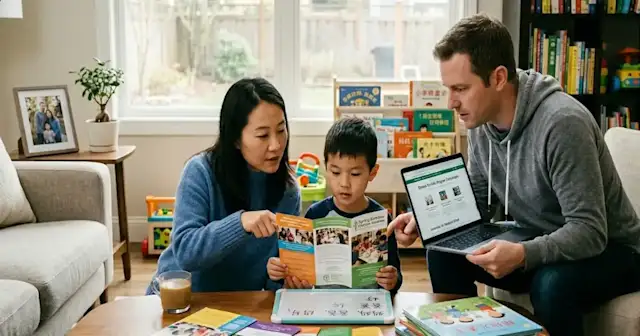
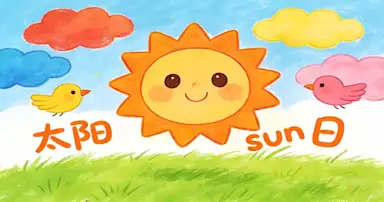
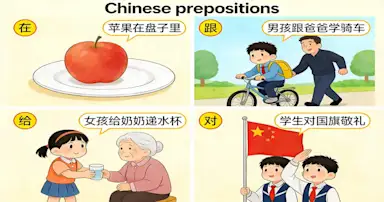
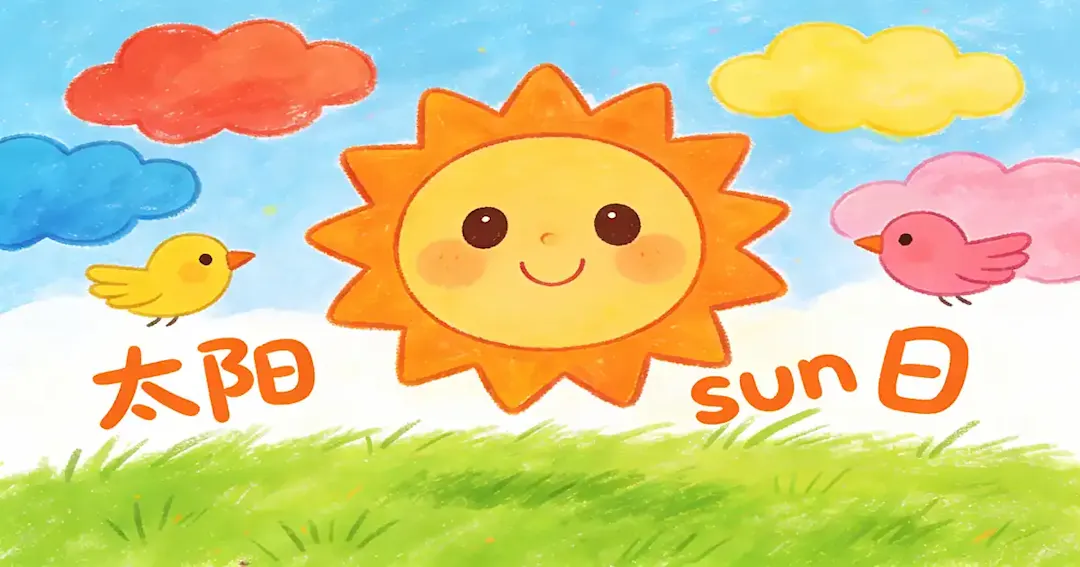
If your child can recognize Chinese characters but freezes when it’s time to write, you’re not alone. Many families get stuck in the same pattern: endless copying, tired hands, and very little real progress.
The good news? Your child doesn’t need perfect calligraphy or hours of drills. They just need a clear way to see how characters are built, a few simple stroke rules, and short practice that actually fits into a busy week.
This guide gives you exactly that—a practical plan to help your child write Chinese characters with confidence, even if you’re not fluent yourself.Let’s start with why handwriting still matters—and how to make it work for your family, not against it.
1. Why Writing Chinese Characters Still Matters for Kids
Some parents quietly wonder:“Do my kids really need to handwrite, as long as they can type and read?”It’s a fair question. But handwriting still matters for a few big reasons:
Better memory: Writing characters by hand strengthens memory and recognition far more than just tapping on a screen.
Stronger reading skills: When kids understand how characters are built—strokes, components, radicals—they decode new words faster.
School expectations: In many Chinese programs and heritage schools, handwriting (including stroke order) is still part of tests and homework.
Cultural connection: There’s something special about being able to write your own Chinese name or a holiday greeting neatly by hand.
So the goal isn’t “perfect calligraphy.” It’s clear, legible characters and a child who feels, “I can do this.”

2. What Parents Need to Know Before Kids Start Writing
Before you jump into practice sheets, it helps to know a few basics. Think of this section as your “orientation.”
2.1 Simplified vs. Traditional (Keep It Simple)
Most kids outside of Taiwan and Hong Kong will start with simplified characters (简体字). If your child is learning with a platform like LingoAce or WuKong’s main Chinese courses, they’re very likely using simplified.
Unless your school clearly says otherwise, you can safely:
Choose simplified as your default.
Use simplified character practice sheets and apps.
Add traditional later if needed.
2.2 What “Stroke Order” Actually Means
Stroke order is just the standard sequence of lines and dots you use to write each character. Kids don’t need to memorize every detail as a rulebook, but they do benefit from a few core patterns like:
Top → bottom
Left → right
Outside → inside (in many “boxed” characters)
Following stroke order helps:
Build muscle memory (so writing becomes automatic)
Make characters more legible
Make it easier to look up characters in dictionaries or apps later
2.3 Radicals and Components (The LEGO Bricks of Chinese)
In WuKong and many other guides, you’ll see a big emphasis on components and radicals—little building blocks that repeat across many characters.
For example:
氵 usually has something to do with water (河, 海, 湖)
口 often connects to mouth/sound (唱, 吃, 吗)
心 or 忄 often connects to feelings and mind (想, 忙, 情)
You don’t need to know all their technical names. For your child, you can just say:“Look, this little part often means something about water/feelings/speaking.”
3. Age-Appropriate Expectations and Basic Setup
One reason handwriting becomes stressful is that expectations are unclear. Here’s a rough, flexible guideline based on common teaching practice and handwriting research.
3.1 Ages 4–6: “Pre-writing” and Very Simple Characters
Focus on:
Large straight lines, curves, and dots
Very simple characters with few strokes (一, 二, 三, 人, 大, 口, 山)
Tracing over big characters with fingers, markers, or a water brush
Tools that help:
Thick pencils or markers
Large 田字格 (tianzige) grid paper
Water calligraphy mats or sand/salt trays
The main goal: coordination and direction, not perfect handwriting.
3.2 Ages 6–8: Stroke Order and Core Characters
Focus on:
Core strokes (横, 竖, 撇, 捺, 点, 提)
Simple stroke order rules like “top before bottom”
A small set of high-frequency characters (numbers, family words, daily words)
Tools that help:
Slightly thicker pencils
Medium-size 田字格
Simple copybooks or printable worksheets
The main goal: consistent structure and starting to remember characters after writing them a few times.
3.3 Ages 8+: Structure, Radicals, and Writing to Communicate
Focus on:
Understanding radicals and chunks, not just full characters
Writing simple sentences (my name is…, I like…, today is…)
Using characters from reading materials and schoolwork
Tools that help:
Regular pencils
Normal-size 田字格
Apps or online tools that show stroke order animations and give basic feedback
The main goal: use writing to express ideas, not just copy lists.
4. Step 1 – Get the Basics Right: Posture, Paper, and Pencils
These details sound boring, but they quietly decide whether writing feels OK or painful.
4.1 Posture and Grip
Both feet on the floor, not twisted on the chair
Paper slightly tilted, not perfectly straight (so the wrist is relaxed)
Pencil resting between thumb and index finger, supported by the middle finger
If your child looks tense, shorten writing time instead of pushing through. Short sessions done often beat one long “battle.”
4.2 Use the Right Grid Paper
Tianzige grids (田字格) are used in schools across China because they help kids:
Keep characters stable in a square
Pay attention to spacing and alignment
Follow stroke order more consistently
You can:
Print free 田字格 sheets from websites or generators
Start with larger squares for younger kids, then gradually shrink them
4.3 Choose Simple Practice Tools
You don’t need fancy gear. You can start with:
1–2 sharpened pencils your child likes
Simple character worksheets
A small tray of salt/sand or a water writing cloth for “first tries”
Many Chinese-teaching blogs and LingoAce articles emphasize making early writing feel playful, not exam-like. Sand trays, water mats, and play dough strokes all show up again and again for a reason—they work.
5. Step 2 – Teach Stroke Order with a Few Simple Rules
Instead of dumping all the rules at once, pick a few that cover most characters. Then keep repeating them casually as you write together.
5.1 Core Rules (Kid-Friendly Version)
Top first, then bottom.
Example: 王, 三
Left first, then right.
Example: 你, 他
Outside first, then inside, then close.
Example: 回, 园, 国
Horizontal before vertical.
Example: 十, 干
Center before sides (for some symmetrical characters).
Example: 小, 水 (when written in certain styles)
Middle stroke last in some “box” characters.
Example: 小’s final dot; 心’s final stroke in some forms
You don’t have to explain each rule as a “law.” Just say things like:
“We usually do the top first.”
“This one is like drawing a house: frame first, then inside.”
5.2 Use Visual Aids
You can use:
Apps/dictionaries that show animated stroke order (many, like ArchChinese, are free to preview).
Printable cards where each stroke has a small numbered dot (1, 2, 3…).
Have your child:
Trace with a finger
Trace with a marker
Only then copy with pencil into 田字格
Three passes may sound slow, but it often saves time because they don’t need to erase and rewrite as much.

6. Step 3 – Help Your Child See Patterns (Radicals and Components)
Here we borrow one of WuKong’s key strengths: using components and patterns so kids don’t memorize each character as a random picture.
6.1 Start with Easy, Meaningful Radicals
Pick a few that show up everywhere in kid-level words:
氵 (three-dots water) – rivers, sea, juice
口 (mouth) – speaking, eating
女 (woman/girl) – mom, sister, good
忄/心 (heart) – feelings
When you write a new character, pause for a second:
“Look, this has the little water part again. Can you find other ‘water’ characters we know?”
This kind of quick connection makes writing feel like solving a puzzle, not doing a chore.
6.2 Build Little Character Families
Create “families” on a scrap paper or whiteboard:
水 family: 水, 河, 海, 洗
口 family: 吃, 吗, 啊, 叫
心 family: 忙, 想, 悲, 快
Ask:“Which part is the same? Which part changes? What might that part mean?”You’re not teaching full etymology. You’re just nudging your child to see structure.
7. Step 4 – A Realistic Weekly Writing Plan (That Won’t Cause Tears)
This is where many parents want something concrete. Here’s a simple model you can adjust.
7.1 Sample Weekly Writing Plan (Beginner / Lower Elementary)
Day | Focus | What to Do (10–15 minutes) |
Mon | New characters | Learn 3–5 simple characters : watch stroke order animation, trace with finger + marker, then write 2 lines each. |
Tue | Review + game | Quick review of Monday’s characters in salt/sand or water mat, then 1 line each on paper. Finish with a “find the character” game in a book or around the house. |
Wed | New characters | Another 3–5 characters from the same topic (numbers, family, school). Same process as Monday. |
Thu | Mix & match | Write simple words or phrases using this week’s characters (e.g., 三个人, 大口吃). Let your child choose favorites. |
Fri | Fun writing | Use play dough, magnets, or a big whiteboard to “build” characters. End with 5–10 neat characters in a grid. |
You can absolutely scale down to 3 days a week if your schedule is packed. Consistency beats ambition.
7.2 Where a Live Class Fits In
Many families find it easier when:
Once or twice a week, a live teacher runs the main lesson
Parents simply support the handwriting follow-up at home
This is where platforms like LingoAce are handy: teachers can introduce characters, correct stroke order in real time, and give targeted homework. Then your role becomes “coach,” not “full-time teacher.”
8. Step 5 – Make Practice Feel Like Play (Not Punishment)
If kids hate writing, they won’t do enough of it to improve—no matter how good your plan is. LingoAce’s and many parenting blogs’ writing tips have a clear pattern: keep it short, varied, and playful.
Here are some easy ideas.
8.1 Change the Surface, Not the Task
Write in sand or salt on a tray
Use a water calligraphy cloth (the writing disappears—very satisfying)
Draw giant characters on a whiteboard or window with washable markers
Same characters, completely different feel.
8.2 Micro-Challenges
“Write this character 5 times as neatly as you can—I’ll do it too; we compare.”
“Can you write 妈 without looking in 30 seconds?”
“How many ‘water’ radicals can we write in one minute?”
Set a timer. Keep it light and silly.
8.3 Use Characters in Real Life
Let your child write labels for drawers: 书, 玩具, 衣服
Write simple holiday cards together: 新年快乐, 中秋快乐
Leave a tiny note in Chinese in their lunch box (even one character counts)
The message you want to send is: “Chinese isn’t just homework; it lives in our real day.”

9. Step 6 – Fixing Common Problems (Without Nagging All the Time)
Every family hits some of the same bumps. Here’s how to handle them calmly.
9.1 Characters Are Messy and “Falling Apart”
What you see: Strokes are uneven, characters drift out of the grid, proportions feel off.
Try this:
Go back to larger tianzige and fewer characters per page.
Have your child trace big model characters for a few days before copying.
Pick 1–2 “focus characters” and really slow down, instead of rushing through 20.
9.2 Wrong Stroke Order (But They “Look OK”)
What you see: The final characters look mostly fine, but teachers or apps say stroke order is wrong.
Try this:
Choose just a few important characters to “retrain” with proper stroke order.
Use animated stroke order tools and have your child air-write first, then write on paper.
When you correct, pick one thing at a time:“Today, we only focus on starting at the top.”
You’re aiming for better, not perfect.
9.3 “My Hand Hurts. I Don’t Want to Write.”
What you see: Complaints, resistance, dragging out 10 minutes of homework into an hour.
Try this:
Check grip and posture—sometimes a small pencil or awkward position is the real culprit.
Switch to shorter sessions (5–8 minutes) but do them more often.
Alternate pencil work with finger tracing in sand or on a tablet.
Sometimes a different adult voice also helps—this is where a live online teacher becomes a sanity-saver for everyone.
10.How LingoAce Can Support Your Child’s Handwriting
You don’t have to do this alone.Platforms like LingoAce are designed for families who want structured Chinese learning without turning parents into full-time teachers. In character-writing specifically, a live teacher can:
Introduce new characters with clear stroke order animations
Watch your child write and give instant feedback
Choose characters that match your child’s level and school curriculum
Mix writing with reading, speaking, and listening, so characters actually mean something to your child
Many families find that:
1–2 live classes per week + short home practice (like the weekly plan above) works far better than either piece alone.
You become the supporter, not the “bad cop.”
11. One Simple Next Step: Book a Free LingoAce Trial
If this all feels like a lot, you don’t need to overhaul everything this week. You can start small:
Pick 3–5 core characters your child is learning now.
Try one short writing session using a stroke order animation and 田字格.
Then, let a professional teacher take over the heavier lifting.
You can book a free LingoAce trial class and let your child experience a live, interactive Chinese lesson where handwriting, reading, and speaking all connect naturally.
From there, you’ll have a clearer picture of:
Your child’s current level
Which characters and skills to focus on
How to build a writing routine that fits your real life, not a perfect schedule on paper