Most kids learn one greeting, use it everywhere, and then wonder why it sometimes lands a little… weird. A cheerful “hello” to grandma can sound too casual. The same “hello” to a teacher can sound a bit too stiff. And the moment a child is nervous, they default to silence—because they’re not sure what fits the moment.
This guide is built for families who searched how to say hi in Chinese because they want something usable: what to say, when to say it, and how to help a child practice without turning dinner into a drill. You’ll get modern greetings you’ll hear today, a quick look at how greetings worked in earlier eras, and a simple “place + person” decision system that kids can follow.
Hi in Chinese: the 10-second answer most families need
If your child only learns three options first, make them these:
你好(nǐ hǎo) — the safe, standard “hello”
您好(nín hǎo) — the polite “hello” (to elders, teachers, customers, formal situations)
嗨(hāi) / 哈喽(hā lóu) — casual “hi/hello” (friends, peers, relaxed settings)
Two friendly “check-in” greetings that often feel more natural than repeating 你好(nǐ hǎo) all day:
最近怎么样(zuì jìn zěn me yàng)? — “How’s it been lately?”
你还好吗(nǐ hái hǎo ma)? — “Are you doing okay?”
A tiny rule that helps kids choose:
If the person is an adult you don’t know well (teacher, older neighbor, staff): start with 您好(nín hǎo).
If it’s everyone else: 你好(nǐ hǎo) is fine, and 嗨(hāi) is fine for friends.
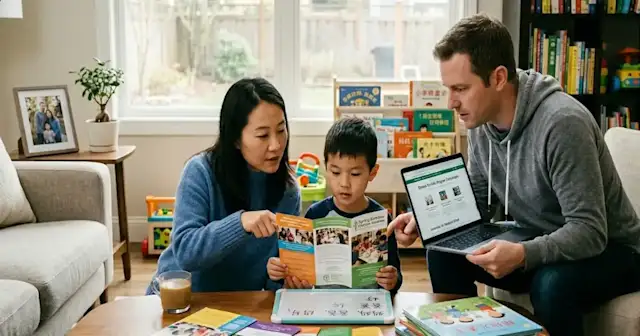
If your child understands these greetings but freezes in real life, the fastest fix is short role-play: one parent is the “teacher,” one is the “classmate,” and your child practices switching greetings by situation. If you want extra structure (and someone else to be the practice partner), a trial Chinese class can help—LingoAce is one option families use to turn greetings into real speaking habits through guided games and gentle feedback.

Hi in Chinese: greetings then vs now (a quick, family-friendly timeline)
A fun thing to tell kids: Chinese greetings weren’t always mostly verbal. For long stretches of history, the “hello” was as much about how you stood and what you signaled (respect, status, relationship) as the words you said.
Then: gestures and ritual mattered a lot
You’ll sometimes see (in historical dramas, museums, books) traditional greeting gestures such as:
拱手(gǒng shǒu) — hands clasped in front of the chest (a respectful greeting)
作揖(zuò yī) — a bowing motion often paired with clasped hands
万福(wàn fú) — a women’s formal salutation gesture in some historical contexts
You don’t need to teach these as “daily greetings.” But they’re useful as a quick story: “People used to greet with gestures more; now we mostly greet with words.” Kids remember a phrase better when it comes with a picture.
Now: words are primary, but relationship still matters
Modern greetings in Mandarin lean heavily on:
Standard hellos: 你好(nǐ hǎo), 您好(nín hǎo)
Casual hellos: 嗨(hāi), 哈喽(hā lóu), 嘿(hēi)
Relationship check-ins: phrases that show warmth or familiarity, like 最近怎么样(zuì jìn zěn me yàng)?
Parent takeaway: teach your child one “safe default” (你好), one “polite default” (您好), and one “friend default” (嗨/哈喽). Everything else can be layered in later.
Hi in Chinese: the “where are we?” decision tree for kids
Kids do best when the rule is simple:Choose greetings by place and person, not by “what sounds coolest.”
1) At school: teacher vs classmate
To a teacher (or any adult in charge):
老师好(lǎo shī hǎo) — “Hello, teacher.”
Extra polite: 老师您好(lǎo shī nín hǎo).
To a classmate or friend:
嗨(hāi)! / 哈喽(hā lóu)!
你好吗(nǐ hǎo ma)? exists, but can feel textbooky; many kids prefer:
最近怎么样(zuì jìn zěn me yàng)?
今天怎么样(jīn tiān zěn me yàng)? — “How’s today going?”
Mini practice (30 seconds): Parent says “teacher,” child says 老师好(lǎo shī hǎo). Parent says “friend,” child says 嗨(hāi).
2) At home: parents vs grandparents
To parents: keep it warm and short.
嗨(hāi)!
我回来了(wǒ huí lái le) — “I’m back.”
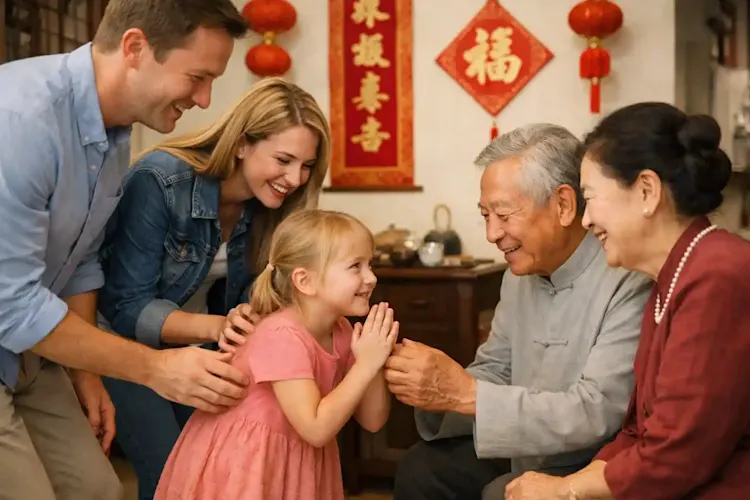
To grandparents/elders: start polite and add warmth.
您好(nín hǎo)!
爷爷好(yé ye hǎo) / 奶奶好(nǎi nai hǎo) — “Hello, grandpa/grandma.”
3) In a store or restaurant
Kids don’t need to recite a speech. Teach one respectful opener and one request.
您好(nín hǎo)!
请问(qǐng wèn)… — “Excuse me / may I ask…”
谢谢(xiè xie) — “Thank you.”
4) On the phone or video call
A lot of kids freeze because they can’t see body language cues. Give them a tiny script.
喂(wèi)? — phone “hello”
你好(nǐ hǎo),你听得到吗(nǐ tīng dé dào ma)? — “Hi, can you hear me?”
我有点紧张(wǒ yǒu diǎn jǐn zhāng),我再说一遍(wǒ zài shuō yí biàn)。 — “I’m a bit nervous; I’ll say it again.”
5) In messages (texting)
Text greetings tend to be shorter.
嗨(hāi)!
在吗(zài ma)? — “Are you there?” (casual; use with friends)
大家好(dà jiā hǎo) — “Hello everyone.” (family group chats)
A quick add-on: time-of-day greetings kids will actually use
If your child is learning greetings for real routines (school mornings, after-school pickup, bedtime), time-of-day lines are sticky because they match what kids already do.
早(zǎo) — “Morning!” (short, common with classmates or coworkers)
早上好(zǎo shang hǎo) — “Good morning.” (slightly more formal)
下午好(xià wǔ hǎo) — “Good afternoon.”
晚上好(wǎn shang hǎo) — “Good evening.”
晚安(wǎn ān) — “Good night.”
Parent tip: don’t teach all of these at once. Pick the one your child can use tomorrow morning (早 zǎo) and the one they can use tonight (晚安 wǎn ān).
“Real-life” check-in greetings (and how to teach them without awkwardness)
Some greetings in Chinese are more like friendly check-ins than literal “hi.” Kids can learn one or two as “level two” greetings once 你好(nǐ hǎo) feels easy.
你吃了吗(nǐ chī le ma)? — literally “Have you eaten?” Often used as a friendly check-in, especially with older generations.
你去哪儿啊(nǐ qù nǎr a)? — “Where are you going?” (casual, familiar; not for strangers)
忙不忙(máng bù máng)? — “Busy or not?”
最近还好吗(zuì jìn hái hǎo ma)? — “Have you been okay lately?”
How to keep it from sounding strange in English-speaking environments: teach kids the function, not the literal translation. Tell them, “This is like saying ‘How’s it going?’”
A simple teaching sequence:
Teach the phrase as a greeting.
Teach one safe answer.
Practice it as a two-line exchange.
Example:
你吃了吗(nǐ chī le ma)?
吃了(chī le)!你呢(nǐ ne)? — “I ate! You?”
Non-verbal greeting habits that matter more than perfect tones
Kids worry about saying the “right” words, but a few non-verbal cues do most of the politeness work:
Brief eye contact (even half a second helps)
A small smile
One notch louder than a whisper
If greeting an elder, pause for a moment (don’t greet while walking away)
For shy kids, set the goal as “one clear greeting + one polite body cue.” That’s a repeatable win.
Hi in Chinese: what to teach first by age (3–6, 7–10, 11–15)
Kids don’t need variety first. They need reliability.
Ages 3–6: three greetings, lots of repetition
Teach:
你好(nǐ hǎo)
谢谢(xiè xie)
再见(zài jiàn) — “Bye”
Add:
老师好(lǎo shī hǎo) if they’re in a Chinese class or bilingual setting.
Practice idea: “Greeting circle.” You greet a stuffed animal like it’s a teacher, then like it’s a friend.
Ages 7–10: add switching by person
Teach:
您好(nín hǎo) (elders/teachers)
嗨(hāi) (friends)
One check-in: 最近怎么样(zuì jìn zěn me yàng)?
Practice idea: “Two doors.” Door A is “school,” door B is “home.” Child walks through each door and chooses the right greeting.
Ages 11–15: add nuance + recovery lines
Give them:
Casual greeting: 嘿(hēi) / 哈喽(hā lóu)
Warm greeting: 好久不见(hǎo jiǔ bú jiàn)! — “Long time no see!”
Smooth follow-up: 最近忙吗(zuì jìn máng ma)? — “Busy lately?”
Recovery line: 不好意思(bù hǎo yì si),我刚才说错了(wǒ gāng cái shuō cuò le)。 — “Sorry, I said it wrong.”
That last line teaches a real-life social skill: repairing the moment.
Hi in Chinese pronunciation: the fixes that keep kids from mashing sounds
Parents often ask for “perfect pronunciation,” but kids need “clear enough to be understood” first.
1) Make tones a game, not a test
Use hand motions:
Tone 1 (flat): hand straight
Tone 2 (rising): hand up
Tone 3 (dip): hand down then up
Tone 4 (falling): hand down
Practice two words:
你好(nǐ hǎo)
您好(nín hǎo)
Do it for 30 seconds, stop while it’s still fun.
2) The “nǐ hǎo” rhythm that trips kids
Kids don’t need theory. They need a listening habit:
Say it like one smooth unit, not two separate “tone performances.”
Copy rhythm first; refine tones over time.
3) Quick consonant fixes
Common English-speaker issues:
h in hǎo: a soft breath, not a hard “huh”
x in xiè (谢谢): closer to “sh” but lighter, with a small smile
4) The 60-second daily drill
Parent says 你好(nǐ hǎo) three times.
Child repeats three times.
Record one version.
Replay and choose one small improvement.
Hi in Chinese: polite vs casual (what sounds natural in 2026)
你好(nǐ hǎo) is correct, but it can feel formal or distant if you use it with the same close friend ten times a day.
A simple “vibe” guide:
你好(nǐ hǎo) — neutral, safe, default; great with strangers and new acquaintances
您好(nín hǎo) — respectful; elders, teachers, customer-facing moments
嗨(hāi) / 哈喽(hā lóu) / 嘿(hēi) — casual; friends and peers
早(zǎo) / 早上好(zǎo shang hǎo) — morning greetings; great at school drop-off
A safe bridge for kids who want to be polite and friendly:
您好(nín hǎo)!今天怎么样(jīn tiān zěn me yàng)?
Hi in Chinese: mini-scripts you can print and practice
These scripts make greetings automatic in moments kids actually face.
Script set A: school drop-off
老师好(lǎo shī hǎo)!
同学好(tóng xué hǎo)! — “Hello, classmates.”
Script set B: meeting a friend
嗨(hāi)!最近怎么样(zuì jìn zěn me yàng)?
好久不见(hǎo jiǔ bú jiàn)!
Script set C: greeting grandparents
爷爷好(yé ye hǎo)!奶奶好(nǎi nai hǎo)!
您今天好吗(nín jīn tiān hǎo ma)? — “How are you today?”
Script set D: a store / restaurant
您好(nín hǎo)!请问(qǐng wèn)…
谢谢(xiè xie)!
Script set E: starting a video call
你好(nǐ hǎo)!你看得到我吗(nǐ kàn dé dào wǒ ma)?
我再说一遍(wǒ zài shuō yí biàn)。
Script set F: shy-kid recovery lines
我有点紧张(wǒ yǒu diǎn jǐn zhāng)。
不好意思(bù hǎo yì si),我再试一次(wǒ zài shì yí cì)。

Hi in Chinese: common mistakes (and quick fixes)
Using one greeting everywhere Fix: adults = 您好, friends = 嗨, everyone else = 你好.
Sounding stiff with friends Fix: keep 你好 for new people, but give kids one casual option: 嗨 or 哈喽.
Skipping the greeting entirely Fix: teach the “two-second greeting.” Even if they can’t speak much, they can say 你好 or 您好.
Over-correcting tones mid-conversation Fix: practice before the moment. In the moment, prioritize clarity + eye contact.
Learning phrases that don’t match the child’s life Fix: tie greetings to routines: school, grandparents, a weekly phone call, one store.
FAQ: hi in Chinese, answered for parents
1) hi in chinese language — What are the most common ways to say “hi” in Chinese?
In everyday Mandarin, the most common choices are 你好(nǐ hǎo) as a safe default, 您好(nín hǎo) as a polite greeting for elders/teachers, and 嗨(hāi)/哈喽(hā lóu) as casual “hi” with friends. Kids can start with two (你好 + 您好) and add a casual option later.
2) hi in chinese translation — What is the correct translation of “hi” in Chinese?
The closest standard translation is 你好(nǐ hǎo). In more formal situations, 您好(nín hǎo) is a respectful alternative. In casual settings, people may also use loanword-style greetings like 嗨(hāi) or 哈喽(hā lóu).
3) hi in chinese mandarin — What should kids say for “hi” in Mandarin Chinese in different places?
Use a place rule: at school or with elders, start with 您好(nín hǎo) or 老师好(lǎo shī hǎo); with friends, 嗨(hāi) or 哈喽(hā lóu) is natural; with strangers, 你好(nǐ hǎo) is always safe. Add a follow-up question (最近怎么样) when kids are ready.
4) hi in chinese word — What Chinese word should I teach first: the polite one or the casual one?
Teach the safe default first: 你好(nǐ hǎo). Then add 您好(nín hǎo) for elders/teachers. Casual greetings like 嗨(hāi) are helpful, but only after your child can reliably choose polite vs neutral.
5) hi in chinese pronunciation — How can my child improve pronunciation when saying “hi” in Chinese?
Keep practice short and consistent: 60 seconds a day saying 你好(nǐ hǎo) and 您好(nín hǎo) with a slow, clear rhythm. Use record-and-replay once a week, and focus on one improvement at a time (clarity, then tones, then speed).
Wrap-up: the simplest greeting plan that actually sticks
If you only want one practical plan from this guide, use this:
Teach 你好(nǐ hǎo) as the safe default.
Teach 您好(nín hǎo) for elders and teachers.
Teach 嗨(hāi) for friends.
Practice switching greetings by place (school, home, store, video call).
Give your child one recovery line so they’re not afraid of mistakes.
That’s how a child moves from “I know the word” to “I can greet someone without thinking.”
If you’d like your child to build real confidence using greetings—especially switching appropriately at school, with elders, and on video calls—a trial Chinese lesson can help. LingoAce is one option families use because teachers can run the role-plays, correct gently, and keep the practice playful, so greetings become automatic instead of stressful.