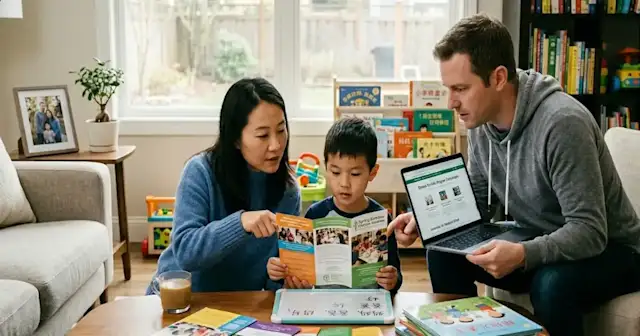
If you’ve ever searched “how to learn Chinese fast”, you already know how overwhelming the results can be. Some claim you’ll be fluent in three months. Others insist it’s “the hardest language in the world.”The truth, as most parents soon realize, lies somewhere in between.
Learning Chinese isn’t about memorizing thousands of characters overnight — it’s about building consistent habits that make progress feel natural. Like watering a small plant: it doesn’t grow faster if you pour the whole bucket at once, but it thrives if you nurture it daily.
For parents raising bilingual kids, the challenge is even greater. You want your child to connect with their heritage or gain a lifelong skill, but you also don’t want language learning to become another stressful task.This is exactly where LingoAce’s approach comes in — blending structured learning with fun, interactive immersion that keeps kids curious instead of exhausted. But before we get there, let’s talk about what really helps you (or your child) learn Chinese fast — and sustainably.
1. Why Learning Chinese Feels Hard — and Why It Doesn’t Have to Be
Let’s get something out of the way: Chinese isn’t “impossible.”It’s different.Unlike alphabet-based languages, Chinese relies on tones and characters, which means your brain learns sound, meaning, and shape at once. That’s new — but not unmanageable.The key lies in how you approach the early stage. Most learners burn out because they try to do everything at once — writing, speaking, reading, memorizing — and get discouraged when nothing sticks.
But neuroscience and language experts like Gabriel Wyner (author of Fluent Forever) remind us that the human brain thrives on spaced repetition and meaningful input, not brute-force memorization. Learning fast means learning smarter.
Think of it this way: → Don’t cram. → Don’t chase perfection. → Focus on small, repeatable wins that compound over time.

2. Build a Fast-Learning Foundation: Sound Before Symbols
If you only remember one section from this guide, let it be this:“Get your ears and mouth comfortable with Chinese before your eyes do.”That means starting with Pinyin — the Romanized system that helps you pronounce Chinese accurately. Most successful learners spend their first few weeks mastering tones, listening to simple dialogues, and repeating words out loud before worrying about characters.
Here’s a simple plan that works well for both adults and kids:
🎧 Listen first: Play short stories, nursery rhymes, or mini-podcasts daily.
🗣️ Imitate the tones: Use apps or YouTube channels to shadow native pronunciation.
🪞 Record yourself: Compare your tone contour — it trains your ear and your vocal muscle memory.
Once pronunciation feels natural, introduce characters slowly.Start with high-frequency ones like 我 (I), 你 (you), 是 (to be). Recognize them in context — flashcards alone aren’t enough.For children, pairing visuals with characters works wonders. LingoAce, for example, combines image-based learning with interactive games that reinforce recognition through fun repetition.
3. Make Daily Immersion a Habit (Even Outside China)
You don’t need to live in Beijing or Taipei to create a Chinese-speaking environment.You just need creative input.Here are easy ways to bring Chinese into daily life:
📺 Media time counts: Let your child watch Chinese cartoons with subtitles (e.g., Peppa Pig in Mandarin, Big Ear Tutu).
🎵 Music exposure: Play Mandarin songs during breakfast or car rides — even passive listening improves tone recognition.
📚 Story time: Replace one English bedtime story a week with a simple Chinese picture book.
🗓️ Language days: Dedicate one day a week to speaking only Mandarin at home — even if it’s just greetings and food words.
4. Smart Memory: Learn Less, Retain More
It’s tempting to think “the more words I memorize, the faster I’ll learn.” But according to the Magnetic Memory Method, your brain stores vocabulary faster when you visualize and associate.Instead of memorizing “猫 = cat,” imagine a cat climbing on the word “猫” itself. Silly images stick.
For kids, make vocabulary physical:
Draw words.
Act them out.
Use flashcards with pictures and pinyin.
Parents can guide review sessions in short, focused bursts — 10 minutes a day of meaningful recall beats 1 hour of passive reading.
5. Avoid Burnout: The Art of Consistency
Every family that succeeds in bilingual learning shares one secret: consistency over intensity.Set achievable daily routines instead of chasing giant leaps.
10 minutes of listening while preparing breakfast.
5 new words after dinner.
One Chinese storybook every Sunday.
Progress compounds quietly.Also, remember motivation fluctuates — that’s normal. When your child resists, switch the format, not the goal. Replace workbook time with games or short conversations. The key is to protect the joy of learning.LingoAce’s small-class approach uses this same principle — turning repetition into interaction. Teachers adjust pacing, tone, and visuals to keep engagement high without cognitive overload.

6. When to Get Professional Help
Sometimes self-study hits a plateau — especially when learners can understand but struggle to speak naturally. That’s where structured online programs come in.What sets good platforms apart is not just teaching grammar, but creating authentic communication.
With LingoAce, lessons are designed around real-life scenarios — ordering food, chatting about school, describing hobbies — all while balancing cultural context and pronunciation accuracy.Parents can track progress, get personalized feedback, and most importantly, see their child enjoy using Chinese, not fearing it.
7. The Real Secret: Keep It Light, Keep It Real
Let’s face it — “fast” doesn’t mean “overnight.” It means faster than average, with less frustration.Here’s the mindset shift that truly changes everything:You’re not teaching your child Chinese; you’re building a relationship with the language.Celebrate small wins. Laugh at tone mistakes.Share moments — like your child proudly ordering dumplings in Mandarin for the first time.That’s when you realize the journey was never just about speed, but connection.
Conclusion: A Better Way Forward
Learning Chinese fast is absolutely possible — when you let go of the “all or nothing” mindset.Whether you’re a parent helping your child or an adult learner picking it up yourself, focus on:
Mastering sounds first.
Building immersive habits.
Reviewing smartly, not endlessly.
Keeping stress low, motivation high.
And when you’re ready for structured guidance, explore LingoAce’s online Chinese programs — designed specifically for children and families who want progress without burnout.