Introduction: What your child can really gain from learning how to read Chinese
When parents type “how to read Chinese” into a search bar, it is usually not only about language. There is a mix of worries underneath:
“Is Chinese too hard for my child?”
“We live in North America. Do we even have time for one more subject?”
“I don’t read Chinese myself. Am I going to hold my child back?”
Those doubts are normal. Chinese characters look dense. People talk about needing thousands of them. It can feel like you are standing at the bottom of a very high staircase with no idea which step to take first.
The reality is quieter than that. Children can learn how to read Chinese in small, concrete steps, as long as the path is clear and the pressure is reasonable.
In 2026 there are more kid-friendly tools, graded readers, and online classes than even a few years ago; the real challenge is deciding what order to use them in.
This guide speaks directly to parents abroad with kids roughly 3–15 years old who want their children to:
recognise and understand common Chinese characters,
start writing those characters with decent stroke order,
and, maybe most importantly, feel that Chinese is part of their everyday life rather than a guilty extra worksheet.
We will break “how to read Chinese” into a sequence of steps a family can actually follow: from sounds, to radicals, to short stories, to handwriting, plus some examples of what this looks like on an ordinary evening when everybody is tired and the dishes are not done yet.
Step 1 – Reframe what “reading and writing Chinese” really means
Before diving into Pinyin charts or character apps, it helps to pause and ask a simple question:
“When I say I want my child to know how to read Chinese, what exactly do I picture?”
Some parents secretly imagine full-page novels in Chinese by middle school. Others just hope their child can send a short message to grandparents without switching to English. Both pictures are valid; the problem comes when the picture is vague.
For a school-age child, reading Chinese usually means three things working together: they can look at a character, say it out loud with the right tone, and understand the basic meaning in context. Writing is slower: copying at first, then slowly recalling characters from memory and using them in short phrases.
A realistic first target for many families in 2026 sounds more like this:
“Within a year or so, my child can recognise around 200–300 very frequent characters, read simple graded stories that have Pinyin support, and write a small set of core words neatly, including their name and some everyday phrases.”
That is not fluency, but it is real literacy. When you reframe how to read Chinese around milestones like that, the next steps feel less like climbing a mountain and more like walking a marked trail. The structure of this article follows that trail.
Step 2 – Start with sounds: build a strong Pinyin and tones foundation
A common pattern goes like this: a parent buys a thick character workbook, asks the child to copy lines of symbols, and within a few weeks everybody hates “Chinese time.” Often the missing piece is sound. Children are trying to memorise shapes with no audio attached.
For most kids growing up in an English-speaking environment, learning how to read Chinese goes much more smoothly if you first make friends with Pinyin and tones. Pinyin is simply a way of writing Chinese sounds with the alphabet your child already knows, plus tone marks.
Instead of turning this into a mini university course, treat Pinyin as something to play with:
Spend a couple of weeks noticing how Chinese syllables are built from “front parts” (initials) and “back parts” (finals). This can be as low-tech as sketching them on sticky notes.
Use songs, tongue twisters, or silly invented words to feel the four tones. You do not need to name them with numbers at the beginning; it’s fine to say “high voice,” “sliding up,” “dipping,” “falling down.”
When your child asks “how do you read Chinese words like this one?”, point to the Pinyin and let them guess rather than jumping to correct them every time.
The important point is that every new character they meet later has a sound waiting for it. That way, when you finally talk about how to read Chinese sentences, your child is not guessing in the dark; they are matching known sounds to new shapes.

Step 3 – Introduce characters through radicals and a “first 100”
Now we come to the part that usually makes parents nervous: the characters themselves. It is very easy to Google something about 3,000 characters and suddenly feel like you are already behind. Children do not need thousands of characters to begin reading. They need a small, meaningful starting set and a way to understand how characters are built.
Think of radicals as Lego pieces. They are small components that show up again and again and often hint at meaning or category. For example, 氵looks like three drops of water and tends to appear in words connected to liquids. 口 resembles a mouth and often shows up in words related to speaking or eating.
You might:
Choose three or four radicals, draw them large on paper, and talk very briefly about what idea each one carries.
When you encounter a new character with that radical in a story, pause and ask, “Remember our water radical? What kind of word might this be?” The guess can be rough; the point is to make characters less mysterious.
In parallel, pick a “first 100 characters” that really appear in children’s lives: numbers, family members, basic verbs like “eat” or “go,” words for school, home, favourite animals. If your child is younger (around 5–8), go slowly and enjoy the repetition. Older kids can move faster, but the logic is the same: build a tight core instead of a huge, random list.
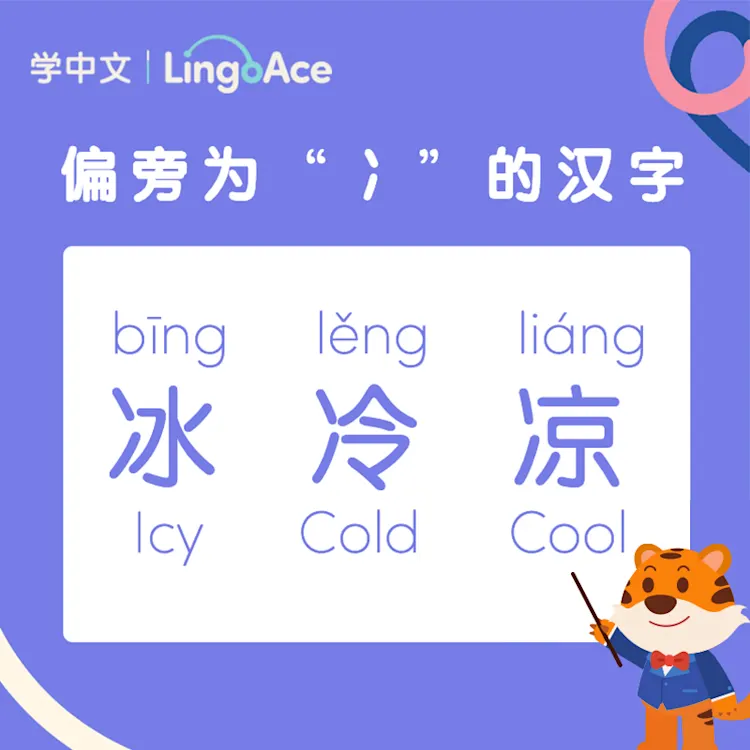
When parents talk about how to read Chinese effectively, this stage often decides whether a child feels empowered or overwhelmed. A thoughtful first 100 characters gives your child quick wins and makes later reading feel familiar instead of foreign.
Step 4 – Create a simple reading habit with leveled stories
Flashcards and copying have their place, but they are not the whole story. If the goal is truly how to read Chinese, your child needs to see characters inside real sentences, in stories that they can follow and enjoy.
This is where leveled or graded reading comes in. The idea is straightforward: texts are written to use a limited set of characters and sentence patterns so that learners are not drowning on every page.
When you look for reading materials in 2026, you might ask yourself a few quick questions instead of just checking the “age 7–9” label on the cover:
Are the characters printed large enough, with generous spacing?
Do most lines include a high percentage of characters my child already knows from our “first 100”?
If there is Pinyin, is it helping them learn how to read Chinese words, or is it so busy that they ignore the characters entirely?
Does the topic match what my child actually cares about—funny animals, soccer, magic, school drama?
Once you have one or two suitable books or apps, connect reading to a moment of the day that already exists. After dinner, before bed, in the car while waiting for another sibling, it doesn’t really matter. A short routine could be as simple as:
You read a sentence aloud, pointing to each character. Your child then reads it back using the Pinyin and characters together. If you run into a new character with a familiar radical, pause for ten seconds to recall the radical story. Then move on.
Five to ten minutes of this kind of shared reading, four or five times a week, has a quiet snowball effect. One day your child suddenly reaches the end of a little Chinese story and realises they understood it. That moment does more for motivation than any lecture on the importance of bilingualism.
Step 5 – Add writing in small, focused bursts
Reading and writing Chinese do not need to be treated as separate planets. In fact, combining them early—gently—is one of the easiest ways to make characters stick. Children who are learning how to read Chinese also usually enjoy “owning” a few characters they can write proudly.
The key is not to swing to extremes. Long pages of copying feel like punishment. On the other hand, waiting years to write anything can create anxiety when writing finally appears. A middle road might look like this:
After finishing a short reading session, choose one or two characters from the story. Ask your child which ones they like the look or meaning of.
First, trace the characters in the air or on the table with a finger, paying attention to the general stroke order. It does not have to be perfect at the start.
Then write the character a few times in a small notebook, saying the sound each time.
For younger kids, mixing drawing and writing helps. They might draw a picture of “water” and then add the character 水 underneath. Older children can create a personal “Chinese word log” where they copy new characters that feel important to them—names of friends, favourite foods, words they see often in class.
You do not need to measure stroke order with a ruler. What you are doing here is tying together sound, meaning, and movement in the hand. All of that supports the bigger goal of how to read Chinese texts with more confidence later.

Step 6 – Build a 2026-friendly routine for busy North American families
On paper, all these steps about how to read Chinese seem reasonable. In real life, there is soccer practice, homework in two other subjects, traffic, and the fact that everybody is tired at 8 p.m. That is exactly why it is useful to design a light routine instead of hoping motivation will magically appear.
Rather than aiming for long study blocks, think in terms of small “slots” spread across the week. For a 7- or 8-year-old, a family might quietly commit to something like:
three short sessions focused mainly on reading and Pinyin, and
two even shorter slots for characters and writing.
Each session is 10–15 minutes, not an hour. Even a busy school night can usually handle that if it is planned.
For older children, maybe around 11–15, it often works better to give them more control. You can agree that on four or five days a week they will: review some characters (using class materials or an app), read a short piece (an article, a comic, a story), and, once or twice a week, write a few lines. When they feel ownership of the schedule, they are less likely to fight it.
The exact combination does not have to be perfect. What matters is that Chinese shows up again and again in small, predictable ways. That repetition is the quiet engine behind how to read Chinese well enough that it stops feeling like a “foreign” script and starts feeling like another way of thinking.
Step 7 – Get expert support so you are not doing this alone
At some point, nearly every parent hits a wall. Maybe your child’s questions get more complicated than your own Chinese. Maybe you can tell they need more challenge, or more structure, than you can comfortably provide on your own. This is where a good online Chinese course for kids becomes less of a luxury and more of a practical tool.
A strong program that teaches children how to read Chinese should not focus only on memorising characters. It should weave together listening, speaking, reading, and writing, because real language never appears in isolation. For you as a parent, it should also provide clear feedback: what your child can already do, where they struggle, and what you can reinforce at home without turning into a strict tutor.
LingoAce, for instance, is designed around children who live outside Chinese-speaking regions. Teachers are trained to build reading and writing step by step, using age-appropriate topics and lots of visuals. A child might encounter a new character in a story during class, meet it again in a game, and then see it later in homework that you can easily supervise.
Whether you choose LingoAce or another provider, the principle is the same. Having a teacher who knows how to read Chinese fluently and understands child development makes the journey lighter for everyone. You still set the tone at home, but you do not have to design the whole curriculum from scratch.
Practical examples: what this looks like in real homes
Abstract steps are helpful, but most parents want to know, “What does this actually look like at my kitchen table?” Below are three little sketches based on common situations. They are not perfect schedules; they’re just snapshots you might recognise.
Example 1 – A 7-year-old just starting characters
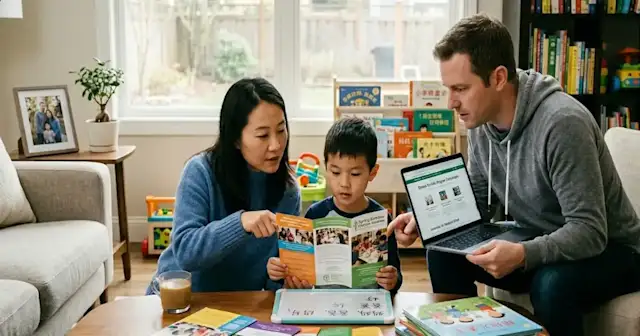
A second-grader has learned some Pinyin songs and can roughly hear the tones. Three evenings a week, right after brushing teeth, a parent and child curl up with a very short Chinese storybook. The parent reads the first line, finger moving smoothly under each character. The child reads it back, leaning on the Pinyin when needed, occasionally laughing at their own mistakes.
When a familiar radical shows up—maybe 口 or 氵—the parent pauses: “Hey, we’ve seen this building block before. What do you think this word might be about?” They do not turn it into a quiz, just a quick reminder. At the end, they pick one new character from the story and write it together on a whiteboard. Total time: around 12 minutes.
Over a few months, that child quietly moves from “Those characters all look the same” to “Wait, I know this one.”
Example 2 – A 10-year-old heritage speaker who only knows spoken Mandarin
This child happily chats with grandparents on video calls but cannot read basic Chinese text. The parents decide that “how to read Chinese” for them means connecting what they already say to what they see on the page.
Four nights a week, they read one short graded article about topics the child enjoys: animals, sports facts, funny school stories. Sometimes they read aloud together; sometimes the child reads silently and then tells the parent what it was about in English or Mandarin. Once a week, they sit down for a bit longer and choose five characters from that week’s readings to copy into a special notebook, trying to remember both sound and meaning.
The child’s spoken Mandarin was already there. Now the written side slowly catches up.
Example 3 – A 14-year-old who wants stronger Chinese for the future
A teenager has decided they might use Chinese later—for travel, for exams, or just to open more options. They take online classes twice a week focused on reading real-world texts: simple news stories, short essays, comics with speech bubbles. On off days, they spend 20 minutes reading something of their choice at a comfortable level, marking unfamiliar characters.
Once a week they try to write a short paragraph about their own life using some of those new words. A teacher in class gives feedback: “These characters are right, here the tone mark is off, this sentence is quite natural, this one could be smoother.”
In all three households, how to read Chinese has turned from a vague goal into small visible actions. The details are different, but the pattern—regular reading, small writing, patient correction—is similar.
Conclusion: Your child’s Chinese reading journey in 2026
If you have read this far, you already care more than enough. Learning how to read and write Chinese is not about being a perfect parent or becoming a full-time language teacher at home. It is about gradually creating an environment where Chinese characters show up often, make sense, and carry stories your child actually enjoys.
In 2026, your child has at least three advantages: a huge range of graded reading materials, digital tools that can make review less painful, and access to live online teachers who specialise in working with kids outside Chinese-speaking regions. When you combine those with a simple routine—sounds first, then radicals and a core set of characters, then leveled stories and small bits of writing—you get steady progress rather than drama.
If you remember only one idea from this guide on how to read Chinese with your child, let it be this: consistency beats intensity. Ten honest minutes, most days, will do more than any heroic one-time effort.
When you are ready to give your child structured, expert guidance in reading and writing Chinese, consider booking a trial class with LingoAce. You will see how experienced teachers turn the steps in this guide into interactive lessons, and your child will experience what it feels like to succeed with Chinese, not just struggle with it.