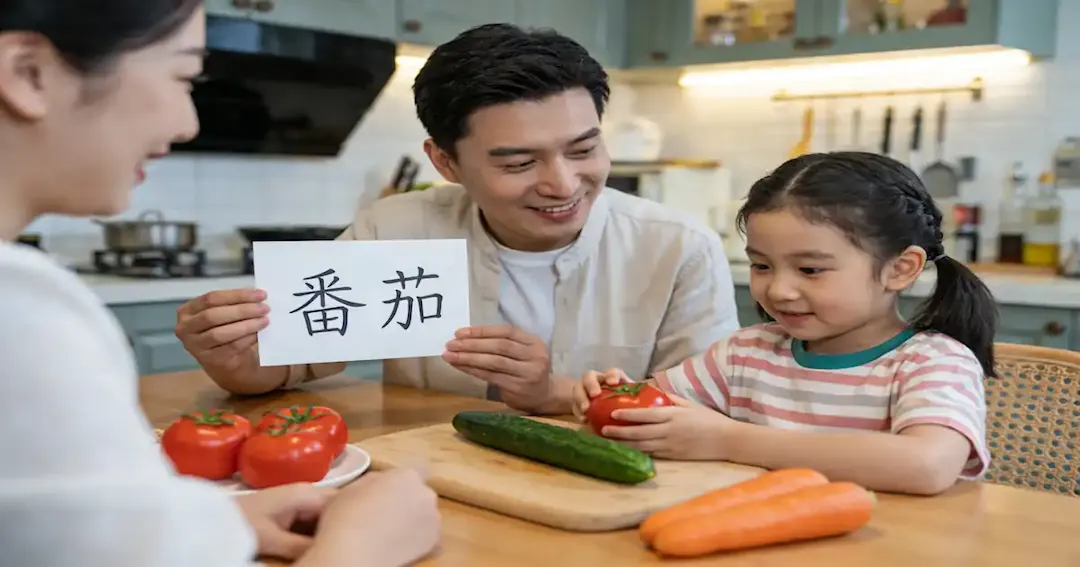
You finally fly back to see family. The door opens, and your child is suddenly surrounded by Chinese-speaking grandparents, aunties, uncles. Everyone is smiling, talking a bit too fast. Someone gently nudges your child and says in Chinese, “叫奶奶 / 叫外婆啊” — “Say hi to Grandma.”And your kid freezes.
It’s not that they don’t like Grandma. It’s just that “grandma in Mandarin” isn’t something they’ve practiced out loud. English jumps out first, and that sweet “Hi Grandma” sounds… a little incomplete in a room full of Chinese.
A lot of overseas parents tell a similar story. They don’t necessarily need their child to be fully fluent tomorrow. But they do hope their kid can, at the very least, say a warm, natural “Grandma” in Mandarin, and maybe one or two sentences that make the grandparents’ whole week.This article is for exactly that.We’ll walk through:
The main ways to say grandma in Mandarin (yes, there’s more than one).
Why Chinese has different words for different grandmothers.
Kid-friendly sentences your child can actually use at family gatherings.
A few simple practice ideas you can do at home.
And how a structured platform like LingoAce can take the pressure off you as the “at-home teacher”.
The goal isn’t to turn you into a linguist. The goal is simple: help your child feel confident, not awkward, when they stand in front of Grandma in Mandarin-speaking family settings.

2. The Two Core Ways to Say Grandma in Mandarin
If you google “grandma in Mandarin”, you’ll quickly see there isn’t just one neat, one-size-fits-all translation. Chinese is more specific. It cares which side of the family you’re talking about.
At the simplest level, here’s what most Mandarin speakers use:
English | Mandarin | Pinyin | Notes |
Grandma (father’s mother) | 奶奶 | nǎinai | Paternal grandma in Mandarin |
Grandma (mother’s mother) | 外婆 | wàipó | Maternal grandma in Mandarin |
So, when your child is talking about or talking to:
Dad’s mom → 奶奶 nǎinai
Mom’s mom → 外婆 wàipó
Already this shows why “grandma in Mandarin” is not just a vocabulary question, it’s a tiny window into how Chinese families think about relationships: the language encodes the family tree.
What about “姥姥 lǎolao”?
If you have roots in northern China, you may hear 姥姥 lǎolao instead of 外婆 wàipó for maternal grandma in Mandarin.Rough guide:
北方地区(North China)→ 姥姥 lǎolao
南方很多地方(South / coastal)→ 外婆 wàipó
标准普通话教材 → 外婆 wàipó 更常见
For overseas families, either 外婆 or 姥姥 is fine. The safest approach is:
Follow what your own family uses.
Tell your child clearly: “This is what we call Mom’s mom in Mandarin.”
You don’t have to cover every possible dialect variation on day one. Just pick the form that matches your family, and say it often.
3. Quick Reference: “Grandma in Mandarin” Cheat Sheet for Parents
To keep things practical, here’s a compact cheat sheet you can screenshot or rewrite on a sticky note.
Situation | Mandarin | Pinyin | Comment |
Talking to Dad’s mom | 奶奶好! | Nǎinai hǎo! | “Hello, Grandma (dad’s side)!” |
Talking to Mom’s mom (South / standard) | 外婆好! | Wàipó hǎo! | “Hello, Grandma (mom’s side)!” |
Talking to Mom’s mom (North) | 姥姥好! | Lǎolao hǎo! | Same meaning, northern usage |
Talking ABOUT Dad’s mom | 我的奶奶 | Wǒ de nǎinai | “My grandma, on my dad’s side” |
Talking ABOUT Mom’s mom | 我的外婆 / 姥姥 | Wǒ de wàipó / lǎolao | “My grandma on my mom’s side” |
Even if you forget all the explanations, if your child can say these lines out loud, your “grandma in Mandarin” baseline is already higher than most.
4. Kid-Friendly Sentences Your Child Can Use Right Away
Here’s where it gets fun. Kids don’t just need the word grandma in Mandarin — they need full sentences that actually work at the dinner table.You can pick 2–3 to focus on first. Don’t try to teach everything in one go; pick what feels natural for your child’s age and personality.
Basic greetings for Grandma in Mandarin
English | Mandarin | Pinyin |
Hi Grandma! | 奶奶好! / 外婆好! | Nǎinai hǎo! / Wàipó hǎo! |
Good morning, Grandma! | 奶奶早! / 外婆早! | Nǎinai zǎo! / Wàipó zǎo! |
Good night, Grandma! | 奶奶晚安! / 外婆晚安! | Nǎinai wǎn’ān! / Wàipó wǎn’ān! |
You’ll notice we’re not over-complicating grammar here. Short, clear, and actually usable is the standard.
Showing affection in simple Mandarin
English | Mandarin | Pinyin |
Grandma, I miss you. | 奶奶,我想你。 / 外婆,我想你。 | Nǎinai, wǒ xiǎng nǐ. / Wàipó, wǒ xiǎng nǐ. |
Grandma, I love you. | 奶奶,我爱你。 / 外婆,我爱你。 | Nǎinai, wǒ ài nǐ. / Wàipó, wǒ ài nǐ. |
Grandma, I like being at your home. | 奶奶,我喜欢来你家。 | Nǎinai, wǒ xǐhuan lái nǐ jiā. |
Grandma, I like talking with you. | 外婆,我喜欢跟你聊天。 | Wàipó, wǒ xǐhuan gēn nǐ liáotiān. |
These are the kinds of sentences that can turn “grandma in Mandarin” from a vocabulary exercise into something that actually makes Grandma tear up a little.
Complimenting Grandma (always useful)
English | Mandarin | Pinyin |
Grandma, your cooking is so good. | 奶奶,你做的菜太好吃了。 | Nǎinai, nǐ zuò de cài tài hǎochī le. |
Grandma, you look beautiful today. | 外婆,你今天真漂亮。 | Wàipó, nǐ jīntiān zhēn piàoliang. |
Grandma, thank you for taking care of me. | 奶奶,谢谢你照顾我。 | Nǎinai, xièxie nǐ zhàogu wǒ. |
Grandma, I had a great day with you. | 外婆,今天跟你在一起我很开心。 | Wàipó, jīntiān gēn nǐ zài yìqǐ wǒ hěn kāixīn. |

5. Why Chinese Has So Many Ways to Say “Grandma”
For English speakers, “grandma” feels simple. One word fits all. But when you dig into grandma in Mandarin, things branch out fast: 奶奶、外婆、姥姥、阿嬷、嫲嫲、婆婆…A few key ideas, kept in parent-friendly language:
Lineage matters Chinese kinship terms pay attention to whether the relative is on the father’s side (paternal) or the mother’s side (maternal).
爷爷 / 奶奶 = father’s parents
外公 / 外婆 = mother’s parents
Inside vs outside family The “外 wài” in 外婆 literally means “outside”, reflecting old ideas about family lines and how daughters “married out”. You don’t need to lecture your child on history, but it’s a nice cultural footnote for you to know.
Region and dialect
Northern Mandarin speakers often say 姥姥 lǎolao for maternal grandma.
In Taiwan, 阿嬷 āmà is very common.
From a child’s perspective, this is a lot. So when you’re teaching “grandma in Mandarin”, don’t feel pressured to cover the entire kinship chart. Start with:
奶奶 nǎinai for dad’s mom
外婆 wàipó or 姥姥 lǎolao for mom’s mom (whichever your family uses)
Later, if your child gets curious, you can pull up a Chinese family tree chart together and explore more terms as a fun “side quest”.
6. Practical Home Activities: Help Your Child Use “Grandma in Mandarin” Naturally
Now the part most parents really care about: how do I get my kid from “I saw it on a worksheet once” to actually using grandma in Mandarin in real life?Here are some low-pressure, very do-able ideas.
6.1 Draw a family tree in Mandarin
Sit down with a blank paper and:
Draw your kid in the middle.
Add parents, then both sets of grandparents.
Next to each grandparent, write:
奶奶 / 外婆 / 姥姥
Plus pinyin (nǎinai / wàipó / lǎolao).
As you draw, ask simple questions in English first, then add Mandarin:
“This is Daddy’s mom. In Mandarin, we say 奶奶, nǎinai.”
“This is Mommy’s mom. We call her 外婆, wàipó.”
You’re not just teaching the word grandma in Mandarin, you’re tying language to a picture of real people your child knows and loves.
6.2 Role-play “visiting Grandma”
You can switch roles: sometimes your child plays “Grandma”, sometimes they play themselves. Keep it light and a bit silly.Sample micro-dialogue:
Child:奶奶好!
Parent:哎呀,我的孙子 / 孙女来了。你想喝什么?
Child:奶奶,我想喝牛奶。
Parent:好,奶奶给你倒。
Do it for just 3–5 minutes at a time. Repetition beats intensity.
6.3 Voice messages to real grandparents
If you live far from family, this is where “grandma in Mandarin” practice becomes very real.
Pick one sentence, for example: “奶奶,我想你。”
Help your child record a short voice message or video.
Send it to 奶奶 or 外婆 on WeChat / WhatsApp.
Kids usually love being praised. Once they see the happy replies, they’ll be more willing to practice new sentences.
7. How LingoAce Handles “Grandma in Mandarin” in Class
If you’ve ever tried to personally teach your child every single family term in Mandarin, you already know: it’s tiring. And sometimes they learn better from a teacher who isn’t mom or dad.In a structured online class like LingoAce, “grandma in Mandarin” is rarely taught as a lonely vocabulary item. It’s wrapped into:
Thematic units – e.g. “My Family”, “Chinese New Year”, “Visiting Relatives”.
Interactive tasks – drawing their family, labeling 奶奶 / 外婆, introducing family members.
Guided speaking practice – teachers prompt kids with “跟奶奶说一句话” (“Say one sentence to Grandma”) and help them fix tiny pronunciation issues on the spot.
That blend is hard to recreate alone at home, especially if you’re juggling work and other responsibilities. Having a clear curriculum, homework that actually matches your child’s level, and teachers who are used to overseas kids… all of that makes “grandma in Mandarin” just one small, natural part of a bigger learning picture, not a huge project you have to design by yourself.
If your long-term goal is more than just one or two phrases — maybe you want your child to chat a bit with grandparents in Mandarin, or handle basic daily topics — then plugging into a system like LingoAce can save you a lot of trial and error.

8. Putting It All Together: A Mini “Grandma in Mandarin” Plan for Your Family
To keep things simple, here’s a tiny, realistic plan you could follow over one or two weeks.
Day 1–2: Words only
Teach 奶奶 nǎinai and 外婆 wàipó / 姥姥 lǎolao.
Make sure your child knows which one belongs to which grandma.
Say them out loud 10–20 times in different little games.
Day 3–4: Add greetings
Practice: 奶奶好,外婆好。
Role-play walking into Grandma’s home and saying hello.
Day 5–6: Add one emotional sentence
Teach: 奶奶,我想你。 or 外婆,我想你。
Have your child record a voice message and send it.
Day 7+: Slowly expand
Add one compliment: 奶奶,你做的菜太好吃了。
Let your child try this at the next family dinner or video call.
If, at the end of this, your child can stand in front of Grandma, say “奶奶好” in a clear voice, and manage one heartfelt sentence, then honestly, you’ve already won. Your “grandma in Mandarin” project worked.
It’s Never Too Late to Start
If you’ve read this far, take a deep breath — because here’s the best part: it’s never too late to start.You don’t need a perfect plan, fancy textbooks, or hours of study every night. What really matters is showing up a little each day, keeping it simple, and keeping it fun.Maybe your goal isn’t fluency right away. Maybe it’s something smaller, but more meaningful — like having your child walk into Grandma’s house this Chinese New Year, smile, and say:“奶奶好!外婆好!我想你!”
Imagine the look on Grandma’s face. That’s language learning at its most real — and most rewarding.Or maybe it’s your next family gathering. You’ve got a few months, and that’s plenty of time. Even learning one new phrase every week means that by then, your child can confidently use Mandarin in front of the people who matter most.
So yes — start today.Write the words down, play those mini games, record those short WeChat messages.You’ll be surprised how much progress happens when it’s tied to love, family, and pride.And if you’d like a little more structure (and less guesswork), the teachers at LingoAce are already doing exactly this — helping overseas kids learn to speak Chinese naturally in real-life family situations.
By next Lunar New Year, or your next trip back to see relatives, your child won’t just know how to say “grandma in Mandarin.”They’ll feel it — every time they say “奶奶,我爱你。” and really mean it.