How 1-on-1 online Chinese classes turned hesitation into confidence
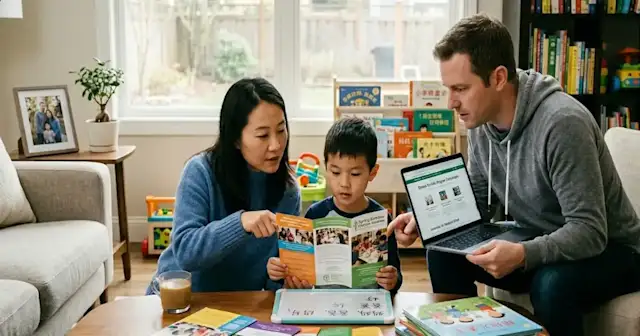
Raising a child to learn Chinese in an English-only environment is no easy task. Without daily exposure, kids don’t naturally pick up the tones, hear sentence patterns, or recognize characters the way they would if surrounded by the language. Parents often find themselves asking: Is Chinese hard to learn when our home, school, and community are all in English? The challenge is real. Unlike languages that share similarities with English, Chinese requires mastering a completely different writing system and a tonal pronunciation structure that can feel intimidating at first.
For many children, this lack of immersion means progress can feel slow, and confidence can suffer. Parents may worry about whether their child will stay motivated or if the language will feel more like a chore than a meaningful skill.
This was precisely the situation for Michael, a young learner from the United Kingdom. Growing up with little to no exposure to Chinese, he faced all the typical hurdles of learning in isolation. His family quickly realized that if they wanted him to succeed, they needed to be intentional in finding the right tools, guidance, and support to bridge the gap between his English environment and his Chinese learning goals.
The Challenge
For children growing up in English-speaking environments, the path to learning Chinese can feel especially steep. Their friends speak English, their teachers speak English, television shows and books are in English, and even the playground games revolve around English. In this context, it’s perfectly natural—and much easier—for children to rely entirely on English. Why wrestle with unfamiliar tones, memorize characters, or struggle to string together sentences in a language that feels foreign when English allows them to communicate effortlessly?
Even when parents try to introduce Chinese at home, the reality is that opportunities for meaningful practice are limited. Casual phrases or short greetings aren’t enough to build real confidence. Without regular conversation partners, children often revert to English, even in situations where Chinese could be used. In a typical English-speaking neighborhood or school setting, the environment doesn’t reinforce the use of Chinese. There are few peers to practice with, no homework to reinforce lessons, and limited exposure to the sounds and rhythms of the language outside of structured classes.
This lack of immersion creates a unique challenge: children may know a few words or characters but never reach the level of fluency that allows them to use Chinese comfortably. They often feel stuck in a cycle of rote learning without real-world application. It’s easy for frustration and self-doubt to creep in. The language starts to feel like an extra burden instead of a skill they can enjoy and take pride in.
The situation becomes even more challenging when the family itself is not fluent in the language. Parents may want to help, but if they aren’t confident in their own Chinese skills, they can’t provide the consistent modeling or practice a child needs. Without guidance or support, children are left navigating the complexities of a tonal language and a logographic writing system on their own. Mistakes can be discouraging, especially when there’s no one around to provide constructive correction or encouragement.

For Michael, a young learner in the United Kingdom, these challenges were very real. Growing up in an English-only environment, he had almost no exposure to Chinese outside the family’s encouragement. Like many children in similar situations, he faced the risk of seeing Chinese as a “difficult and optional” subject rather than a language he could actually use and enjoy.
Parents in English-speaking environments often recognize the problem early: the language won’t stick on its own. Success requires intentional action, consistent exposure, and access to resources that make learning both accessible and engaging. Otherwise, children default to what is easiest and most familiar: English. For families who want their children to thrive in Chinese, the challenge is not simply teaching vocabulary or tones—it’s creating an environment that encourages daily practice, builds confidence, and turns learning into something meaningful rather than a struggle.

The Turning Point
Everything changed when Michael’s family discovered LingoAce’s Chinese language learning program. After taking a trial class, they immediately saw how different it was from traditional approaches. Michael was soon enrolled in LingoAce’s Core Program, which is specifically designed for children learning Mandarin for the first time or those with some prior exposure at home. The curriculum focuses on practical, everyday conversations and is structured to build skills step by step, giving children a solid foundation under the guidance of a professional teacher. Lessons are delivered through interactive multimedia, including animated stories, songs, and games, which help make learning engaging and fun.
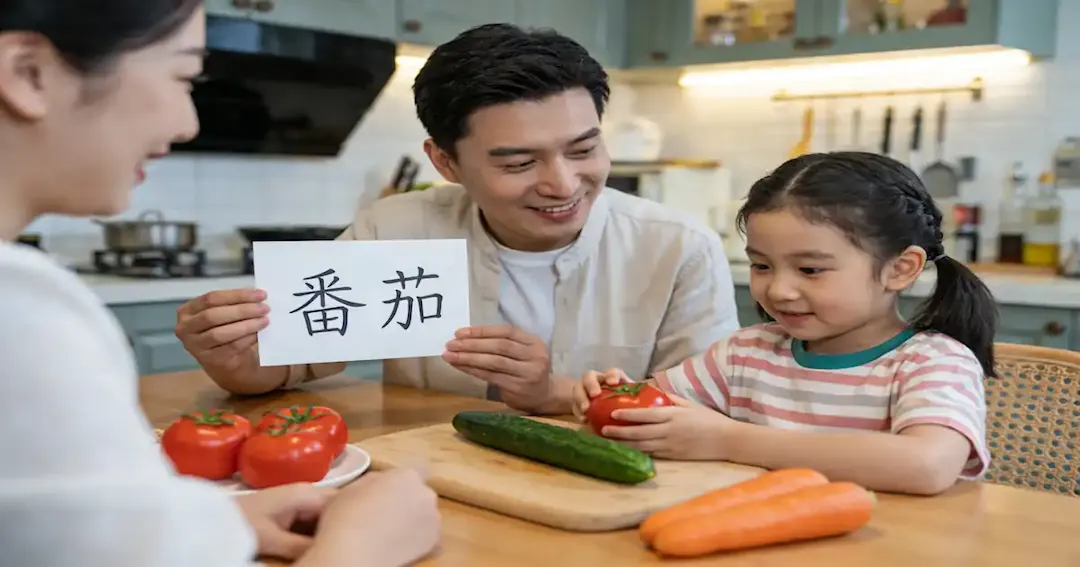
One of the biggest advantages for Michael was the 1-on-1 format. Unlike group lessons or local weekend schools, where the teacher’s attention is divided among many students, Michael received the full focus of his instructor. Each lesson was tailored to his interests, pace, and current level, enabling him to master concepts before progressing to more challenging material. Characters, phrases, and tones were not taught in isolation; instead, he learned through stories, dialogues, and interactive exercises that connected language to real-life situations. This approach transformed Chinese from a series of abstract symbols into something meaningful and relevant.
With consistent support and personalized guidance, Michael’s confidence and abilities grew rapidly. He moved from hesitating over simple greetings to reading independently and speaking more fluently. He started using new vocabulary in conversation and could express himself with clarity and enthusiasm. His family noticed a remarkable shift: learning Chinese was no longer a source of stress or frustration, but an activity he genuinely looked forward to. He began to enjoy practicing characters, participating in class activities, and even sharing what he learned with his parents.
By creating an environment where mistakes were part of learning and each lesson was engaging, LingoAce helped Michael experience the joy of progress firsthand. For the first time, he saw Chinese not as a “hard” language but as a skill he could actually use, understand, and be proud of.
The Breakthrough
Michael’s hard work and consistent practice began to pay off in ways that went beyond what his family had imagined. Within months of starting LingoAce’s Core Program, he transitioned from struggling with basic phrases to reading short stories independently and holding conversations with confidence. What had once felt like an impossible challenge—a language filled with unfamiliar tones and characters—had become an achievable skill.
One of the most visible signs of his progress came when Michael participated in a local Chinese speech contest. For a child who had previously been hesitant to speak Mandarin, this was a major milestone. Not only did he deliver his speech confidently, but he also impressed the judges and audience, ultimately earning 3rd place. For his family, this achievement was more than a ranking—it symbolized his growth in fluency, comprehension, and self-assurance.
Beyond awards, the transformation in Michael’s attitude toward Chinese was remarkable. He no longer saw the language as intimidating or frustrating; instead, he approached each lesson with curiosity and excitement. Reading became a source of enjoyment, not just practice, and he began applying new words and phrases in daily life, from greeting relatives in Mandarin to sharing stories he had learned in class.
Michael’s journey illustrates the emotional payoff of consistent support and the right learning environment. The question of whether Chinese is “hard to learn” had transformed from a worry into a personal triumph, demonstrating that challenges can be turned into opportunities with the right tools and support.
What Families Can Learn
Michael’s journey demonstrates that while learning Chinese can feel daunting in an English-speaking environment, the right support and approach make all the difference. One of the clearest lessons is that consistent exposure matters. Children need regular opportunities to hear, speak, and engage with the language in meaningful ways. Without this, it’s easy for them to default to English, where communication feels effortless and familiar.
Another key takeaway is the importance of personalized attention. In Michael’s case, the 1-on-1 lessons through LingoAce allowed his teacher to tailor instruction to his pace and interests. This focused guidance made complex concepts, such as tones and characters, manageable, and it helped him progress without feeling frustrated or left behind. For parents, this highlights that small class sizes or individualized programs can accelerate learning and build confidence more effectively than group lessons alone.

Engagement is also essential. Learning Chinese through interactive stories, games, and songs transformed it from a series of abstract challenges into something enjoyable and relevant for Michael. When lessons are engaging and relevant to real-life situations, children are more motivated to participate, practice, and retain the knowledge they learn.
Ultimately, Michael’s experience shows that Chinese doesn’t have to be “too hard” for children in English-speaking environments. With the right tools, personalized instruction, and consistent practice, children can not only master the language but also develop confidence, pride, and a meaningful connection to Chinese culture. Families who invest in this journey give their children a skill—and a sense of accomplishment—that lasts far beyond the classroom.
Looking for an online Chinese class for your kids to learn Mandarin and Chinese culture? LingoAce is one of the best ways for kids to learn Chinese online. Each one-on-one lesson is the product of nearly 200 hours of curriculum development, teacher training, and quality control. LingoAce classes are tailored to meet your child's learning needs.
Experience a redefined Chinese learning experience and book a free trial class with us today.