

Key Takeaways:
What are the Cognitive Benefits of Being Bilingual for Young Minds?
Switching between two languages acts as a mental workout, helping bilingual children to experience stronger brain development.
This improves problem-solving, creativity, memory, attention control, multitasking, and overall cognitive flexibility.
Bilingualism strengthens executive function, helping children plan, organise, and adapt to new learning situations easily.
Introduction
Giving your child the gift of bilingualism is valuable today. In a world where cultures overlap, global communication is instantaneous, and opportunities increasingly cross borders, the ability to move comfortably between two languages becomes a competitive edge. Besides communication advantages, the cognitive benefits of being bilingual are profound. Each time a child switches between languages, their brain engages in a powerful “mental workout” that boosts long-term development.
How does this work? Let’s explore more in this article.

What are the Cognitive Benefits of Being Bilingual
1. Bilingualism Boosts Problem-Solving and Creativity
One of the advantages of bilingualism is how it refines problem-solving skills. When children shift between two languages, they naturally learn to think flexibly. This cognitive flexibility helps them view problems from different angles and express ideas in richer, more nuanced ways.
A child who masters both English and Chinese gains access to a broader emotional and cultural vocabulary. The ability to choose between phrases, sentence structures, or ways of describing a concept encourages divergent thinking. It is the same skill that drives creativity in writing, speaking, and real-world problem-solving.
2. Strengthens Memory and Multitasking Skills
Managing two languages means the brain is regularly storing, retrieving, and organising information. This strengthens working memory, influencing everything from following instructions to solving math problems. Bilingual children are also better multitaskers. Research by cognitive scientist, Dr. Ellen Bialystok, consistently shows that bilingual individuals outperform monolingual peers in memory, focus, and decision-making tasks.
As they are used to switching between language systems, they can juggle multiple mental processes more smoothly. For instance, a child attending 1 to 1 Chinese tuitionmay recall vocabulary lists more easily and follow multi-step instructions with greater accuracy.
3. Improves Focus and Attention Control
Young bilingual learners constantly filter between two vocabularies and two sets of grammar rules. This “filtering” strengthens selective attention, tuning out distractions and focusing on what matters. Bilingual brain development results in improved concentration, even during challenging or fast-paced lessons.
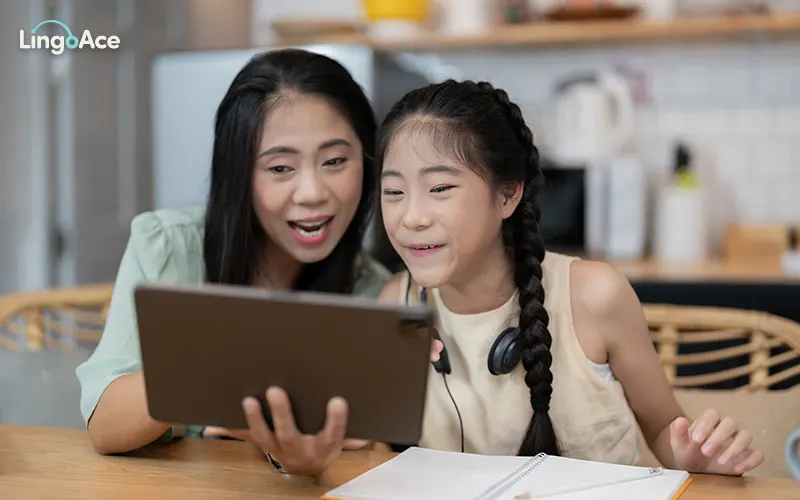
Notably, interactive online learning further reinforces this ability. Activities that require listening, responding, reading, and conversing in real time help children build linguistic precision and focus simultaneously. This is why parents turn to structured programmes like online Chinese classes in Singapore that specialise in bilingual learning.
4. Builds Executive Function and Cognitive Flexibility
Executive function refers to planning, organisation, self-control, and the ability to switch tasks effectively. Bilingual children strengthen these skills naturally. Every choice they make about which language to use sharpens the brain’s executive control system
With this cognitive flexibility, they can adapt quickly to new classroom topics. Bilingual learning strategies also allow them to manage transitions, balance homework, and handle unfamiliar problem-solving scenarios. As a result, it supports emotional regulation and social confidence.

Cognitive Benefits of Being Bilingual: Why It Matters in Singapore’s Education
Students aligned with the MOE syllabus must balance multiple subjects, complex writing tasks, and higher-order thinking assessments. Bilingual children often have an edge because their brains are already wired for efficient switching and planning.
How LingoAce Supports Strong Bilingual Development
The cognitive benefits of being bilingual go deeper than speaking two languages. Bilingualism enhances creativity, sharpens focus, strengthens memory, and builds essential executive function. Younger children learn languages more easily because their brains are primed for early language acquisition. The earlier they begin, the stronger their neural connections.
If you're ready to help your child unlock these lifelong advantages, LingoAce offers the guidance, structure, and expert support to make bilingual learning joyful and effective. We help them learn Mandarin in Singapore more effectively by providing:
Engaging live lessons
MOE-aligned and international syllabi
Customised learning pathways
A fun, gamified experience that keeps kids motivated
Reach out to us to learn more about our programmes.