

Key Takeaways:
What Can Parents Do to Help Their Child Recognise Chinese Characters Effectively?
Help your child see characters as meaningful pictures or ideas to make recognition more intuitive.
Teach common radicals so your child can spot patterns and understand the meaning faster.
Replace worksheets with stroke-tracing apps, drawing tools, and hands-on activities to reinforce proper stroke order.
Connect characters to images or simple stories to boost memory and interest.
Gamified platforms and interactive Chinese lessons make practice fun and consistent.
Create daily exposure: Integrate simple Mandarin habits at home, like labelling objects or reading bilingual books, to reinforce recognition naturally.
Introduction
For many parents, helping a child recognise Chinese characters can feel like a huge task. Unlike alphabetic languages such as English, where letters represent sounds, Chinese relies on a logographic writing system. This means each character carries visual meaning, historical roots, and structural patterns. Besides, the language depends heavily on recognising shapes, radicals, and symbolic components rather than sounding out words letter by letter.
While the process may be challenging at first, the right approach can offer a rewarding learning experience. With the support of interactive Chinese lessons and engaging digital tools, parents no longer need to rely on rote memorisation alone.
In this article, we share practical, child-friendly strategies that can help your little one recognise characters with ease.
How to Support Your Child in Recognising Chinese Characters
1. Start with the Basics
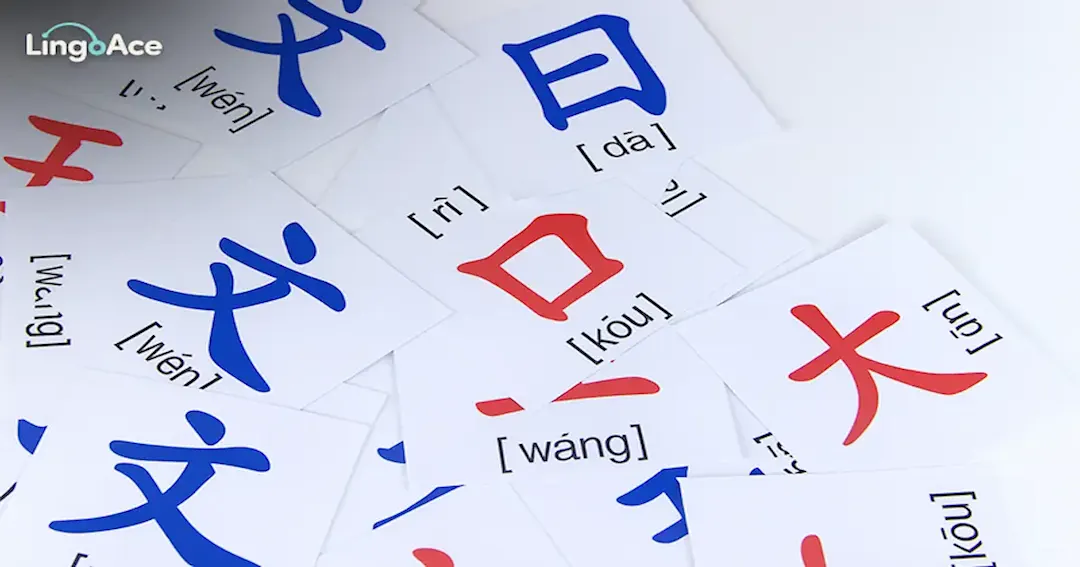
Prior to character recognition, children should first understand what they represent. Each character carries meaning on its own. It can represent a picture, an idea, or an entire word. For instance, 人 (rén) resembles a standing person, while 木 (mù) looks like a tree or piece of wood. Once children start seeing characters as mini-pictures, learning becomes much more joyful.
As parents, you can nurture this awareness in small, gentle ways throughout the day. Spot a character together at the supermarket or bus stop and ask, “What do you think this looks like?” Follow your child’s lead and watch their imagination come alive. These bite-sized moments can spark their curiosity and slowly strengthen their early Chinese literacy effortlessly.
2. Teach the Building Blocks
After your child starts recognising characters as little pictures, you can take it one step further by showing them radicals. Hidden inside many Chinese words, these elements hint at what a character is about. For example, the radical 氵 (three water drops) pops up in words connected to water, like 河 (hé, river) and 海 (hǎi, sea). The radical 木 (mù, wood), on the other hand, appears in characters linked to trees or nature.
Try turning radicals into a simple detective game. Say something like, “Let’s see how many characters with the three water dots we can spot today!” As they naturally enjoy matching shapes and noticing patterns, the process of recognising Chinese characters feels intuitive instead of stressful. This helps them feel more confident when learning Mandarin in Singapore, allowing them to navigate different subjects more comfortably.
3. Make Stroke Order Fun and Interactive
Writing Chinese characters plays an important role in long-term recognition, but it does not have to involve piles of worksheets. When children can see, trace, and explore each stroke in a hands-on way, writing becomes part of an immersive enrichment experience rather than a repetitive task.
In this context, digital stroke animations help children learn best visually. When they watch each stroke appear in the correct order, their brains connect movement with meaning, making characters easier to remember. Many apps also use spaced repetition, which gently reintroduces characters over time. Through regular reviews, children can improve long-term recall without forcing memorisation.
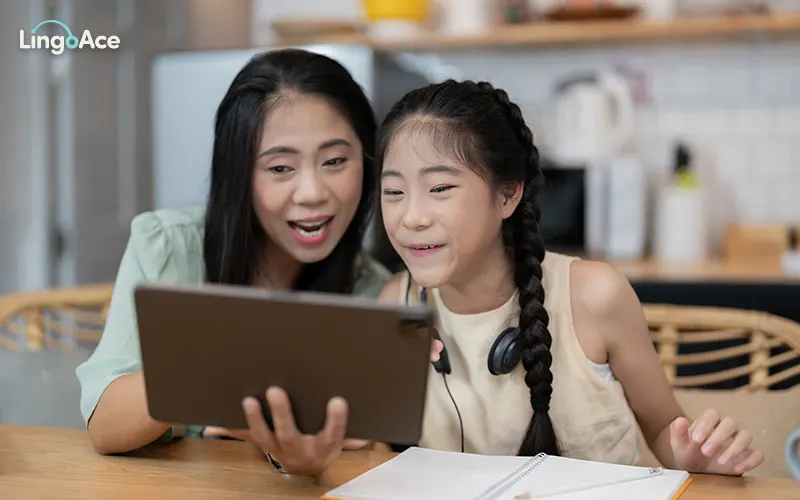
LingoAce’s 1 to 1 tuition programmes in Singapore take this a step further through interactive learning. Children watch guided animations, trace along in real time, and receive encouragement from their teacher as they practise. This blend of Mandarin character learning tools, repetition, and live feedback creates a learning environment where children stay engaged.
4. Use Stories, Images, and Imagination
Children learn best when ideas are wrapped in stories. Imagination gives them an emotional doorway into the language, helping them connect more deeply with what they read. Instead of treating a Chinese character as something to memorise, you can help your child imagine the little world behind it. This shifts learning from “I must remember this” to “I can picture this,” which is far more engaging.
Introducing a simple “story starter” routine during reading time can be a good approach. Choose a new word your child is learning and say, “Let’s make up a tiny story about this word. Who is using it? Where are they? What happened next?” When your child builds a story around the meaning, they can better remember it, as their imagination anchors the idea. These meaningful memory hooks and captivating storytelling help children connect emotionally to the language, boosting their confidence in reading and communication.

5. Make Learning Exciting with Online Tools
Modern digital platforms have transformed how children recognise characters. Through gamification, progress tracking, and engaging teaching methods, online tools make the learning process lively and motivating. These features commonly include:
AI-powered character recognition
Gamified quizzes and rewards
Unlockable stories and songs
Fun animations for younger learners
Real-time progress reports for parents
LingoAce brings these elements together in a way that feels seamless and child-friendly. Lessons blend interactive activities, guided practice, and visual explanations so children stay motivated while strengthening their foundation. Even if young learners already attend an enrichment centre in Singapore, LingoAce provides extra support at home through its lively digital environment.
6. Support Learning with the Right Environment
Your child will recognise characters more confidently when they appear naturally throughout the day, not just during homework time. Instead of reserving the language solely for lessons or homework time, simple daily habits can reinforce recognition effortlessly.
Parents can start small with daily routines. These include labelling a few household items in Chinese, reading a short story book before bedtime, or using quick phrases like “吃饭了” (time to eat) or “走吧” (let’s go) during daily activities. You can even create a “Chinese moment” of the day, where you and your child spend three minutes recognising a new word or revisiting one they learnt earlier. The more they see and hear Chinese in meaningful contexts, the easier it becomes to recognise characters and recall vocabulary.
How to Give Your Child a Strong Start
Supporting your child in recognising Chinese characters goes beyond memorisation. It starts with sparking curiosity, using meaningful stories, exploring radicals, and practising through fun, interactive tools. With these approaches, your child can build a solid foundation in early literacy that grows steadily over time.
At LingoAce, our online learning programmes are designed to make Chinese accessible, fun, and culturally meaningful for young learners. Through expert teachers, personalised guidance, and dynamic online learning tools, children gain the confidence they need to progress in Chinese with joy and clarity.
Get in touch with us and learn how we can support your child’s learning journey.