

Key Takeaways:
How Can Children Learn Area and Perimeter More Effectively?
Children can learn the concepts more effectively when they are explained clearly and supported with visual examples.
Breaking composite shapes into simpler shapes helps children apply formulas accurately and confidently.
Gamification and visual learning tools make abstract geometry concepts easier for children to understand and remember.
Introduction
Area and perimeter are two essential concepts in early geometry. They help children understand how shapes occupy space and how their boundaries are measured. These ideas form the foundation of geometric measurement, supporting more advanced problem-solving skills as children progress in math.
In this article, we explore how these concepts work and how they can be taught effectively. For parents supporting learning at home, understanding them can help build a child’s confidence and accuracy in math.
What is the Difference Between Area and Perimeter?
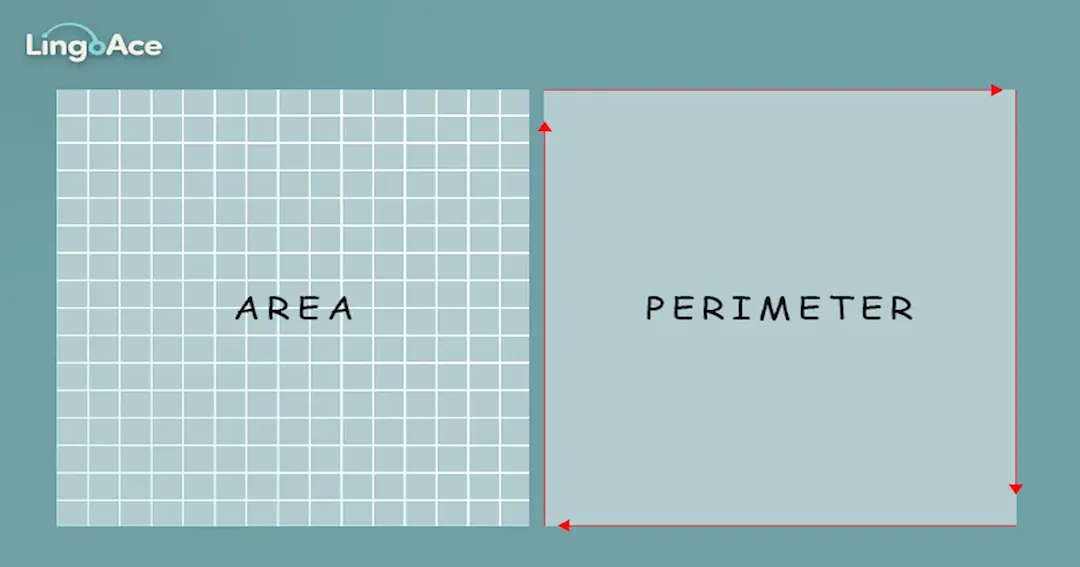
Although these concepts are often taught together, they measure very different things. Area measures the amount of space inside the shape, whereas perimeter refers to the total distance around the outside of a shape. Imagine a garden. The fence around it represents the perimeter, while the grass-covered ground inside represents the area.
However, in practice, many children find it challenging to decide which measurement applies to a given problem. They may correctly recall formulas, but apply the wrong one. This often happens when they do not fully understand the purpose of each measurement.
When lessons emphasise clear explanations and visual representations, children can see how “inside space” differs from “outer distance”. This conceptual clarity helps them approach questions with greater confidence and reduces common errors early in their learning journey.
How to Use the Right Formulas
Once children understand what area and perimeter measure, the next step is applying the correct area and perimeter formulas for different shapes.
1. Rectangles and Squares
These are often the first shapes children encounter.
Formulas:
Area = length × width
Perimeter = 2 × (length + width)
Using real-life objects such as books, tiles, or tablet screens helps children visualise why these formulas work.
Examples:
A rectangular book cover is 20 cm long and 15 cm wide.
Area = 20 × 15 = 300 cm²
This tells us how much surface space the book cover has.
Perimeter = 2 × (20 + 15) = 2 × 35 = 70 cm
This tells us the total distance around the edge of the book cover.
2. Triangles
Triangles introduce a new layer of thinking.
Formulas:
Area = ½ × base × height
Perimeter = the sum of all sides
Examples:
A triangular flag has a base of 10 cm and a height of 6 cm. The other two sides measure 8 cm and 9 cm.
Area = ½ × 10 × 6 = 30 cm²
This shows the amount of space inside the triangle.
Perimeter = 10 + 8 + 9 = 27 cm
This gives the total distance around the triangle.
To help children understand why the area formula uses “½”, teachers often draw the triangle inside a rectangle with the same base and height. Seeing that two identical triangles make up the rectangle helps children understand where the formula comes from, rather than memorising it blindly.
3. Other Polygons
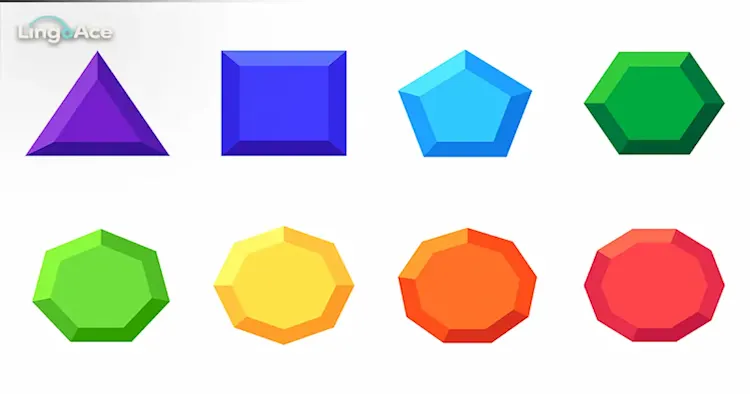
As children advance, they also learn composite shapes, which are made up of two or more simple shapes. Rather than memorising new formulas, students learn to break these figures into rectangles, squares, or triangles. This builds logical thinking and reduces cognitive overload.
Structured online math tuition in Singapore can reinforce this process. With guided instruction, children are shown how to identify each component shape, apply the correct formulas, and combine the results accurately.
How Dimensions Affect Area and Perimeter
As children deepen their understanding, they begin to realise that these two concepts do not always change together. Adjusting a shape’s length or width can increase one measurement while leaving the other unchanged.
For instance, two rectangles may have the same perimeter but very different areas, depending on how their lengths and widths are arranged. In the same way, two shapes can have equal areas but different perimeters if their boundaries are shaped differently.
Exploring these variations helps children see that formulas alone do not tell the whole story. Instead, they learn to analyse how dimensions interact, encouraging flexible thinking and greater problem-solving skills.
How Gamification and Visual Learning Support Understanding
Learning math today is no longer limited to pen-and-paper practice. Gamification and visual learning tools help bring abstract ideas to life, making lessons more engaging and memorable for children. This is why many math enrichment classes in Singapore now integrate interactive methods into their teaching.
1. Visual Models Make Concepts Clear
Digital grids, drag-to-stretch shapes, and shading tools allow children to see how area grows as space is filled, while perimeter changes only along the edges. Animated resizing helps students clearly distinguish between “inside space” and “outer boundary”, reinforcing the core difference between the two concepts.
2. Interactive Challenges Reinforce Accuracy
Short quizzes where children estimate measurements, compare shapes, or complete missing sides strengthen spatial reasoning. Timed challenges encourage quick thinking while maintaining accuracy, without overwhelming the learner.
How to Build Strong Math Foundations for Your Child?
Whether learning happens at home or through guided instruction, the goal is the same: to help children logically understand math. Platforms like LingoAce combine research-backed pedagogy with personalised teaching, keeping lessons aligned with international standards while remaining flexible for busy families.
Guided by experienced tutors, our quality online math classes feature thoughtfully planned programmes and interactive learning materials. These elements help your child gain confidence in core concepts, building a strong foundation for future mathematical success.
Get in touch and let us support your child’s long-term academic growth.