

With 2025’s Chinese New Year being right around the corner, the resounding beats of drums and the captivating performances of the Chinese lion dance take center stage in Singapore as a central way of celebrating the Chinese New Year.
In this exploration, we delve into the heart of the lion dance, unlocking the cultural significance of the lion dance, its symbolic meaning, and the captivating spectacle it brings to Singapore's Chinese New Year celebrations.
What Is the Lion Dance?
The Lion Dance, is a traditional art form originating from China involving intricate choreography, vibrant costumes and a history of over 5000 years.
Under the intricate costume lies two individuals seamlessly coordinating their actions. One directs the head's movements, while the other mirrors these actions through precise footwork at the tail end. At the heart of this performance is the drum, often referred to as the "heartbeat of the lion," serving as the guiding force. Accompanied by the rhythmic beat, cymbals and gongs add an extra layer of excitement and flair to the overall spectacle.

The Origin of Lion Dance - Legend of Nian Shou 年兽 (nián shòu)
Legend has it that Nian Shou 年兽 (nián shòu) a mythical beast, terrorized ancient China annually on Chinese New Year’s Eve at the stroke of midnight to attack nearby villages. After years of suffering villagers discovered its fear of loud noises and the color red. As such, the origin of the lion dance and its accompanying firecrackers can be traced back to these tactics used to repel the Nian.

Beyond being a captivating display of skill and coordination, the lion dance also symbolizes unity, strength, and warding off evil spirits. The vibrant and dynamic performance, featuring a lion costume animated by skilled performers, has become an integral part of Chinese celebrations, particularly during the Lunar New Year, embodying cultural traditions and bringing auspicious energy to festivities. Learn more about similar cultural stories with our Advanced China Language Program!
Lion Dance Symbolic Purpose – Singapore's Context
In the context of Singapore, the Lion Dance carries significant symbolic purposes deeply rooted in cultural traditions.
Rénrì (人日), marking the seventh day of the Chinese New Year, is celebrated with the lion dances to symbolize the creation of mankind. The vibrant display of the lion, often adorned with auspicious colors like orange, embodies prosperity and good fortune.
In a typical lion dance, a captivating narrative unfolds as one or two lions conquer obstacles, ranging from dangerous creatures like snakes and spiders to challenging terrains such as caves and rivers. These scenarios are brought to life using a variety of props. The culmination of the performance, known as Cǎi qīng (採青) or "plucking the greens," involves the lion symbolically spreading good fortune by tossing a lettuce at the audience.

Additionally, the tossing of orange peels during the dance symbolizes the scattering of gold and wealth. This rich tradition not only entertains but also reinforces communal unity, cultural pride, and the collective aspiration for a year filled with blessings and success in Singapore's diverse and harmonious society. While often linked to Lunar New Year, lion dances are not confined to specific seasons, gracing diverse events like weddings, business openings, school festivals, and community gatherings. This dynamic and symbolic art form remains a testament to enduring cultural traditions that captivate audiences globally.
What Should You Do at A Lion Dance Performance? Respect The Lions
During a Lion Dance performance, do refrain from touching or interfering with the lion performers during their dance, as this can disrupt their movements. Doing so may pose safety risks for both performers and onlookers as they jump from one stack to another.
The lion head also typically features a mirror on the forehead, symbolizing the ability to reflect negative energy and deflect it away. While there is a cultural tradition of touching the lion's mirror for good luck, it's important to note that this should be done with respect and in accordance with any guidelines set by the performers or organizers.
In some cases, performers may encourage interaction, while in others, they may prefer spectators to enjoy the performance without physical contact.
Offer Red Packets (Ang Pao)
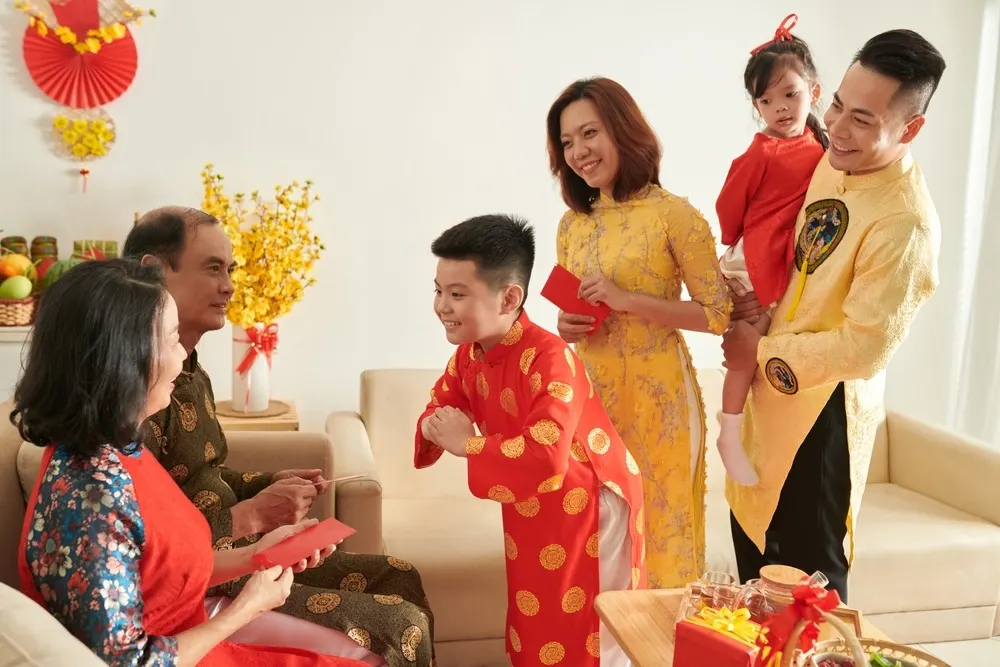
It is also customary to present red packets containing money to the lion dancers as a gesture of good luck and prosperity.
The act of giving Ang Pao is not only a gesture of goodwill but also reflects a belief in sharing blessings and contributing to the auspicious atmosphere of the event. In embracing this custom, both the givers and receivers partake in the communal spirit of joy and prosperity during festive occasions. Want your child to learn more of such content? For the Month of February, simply sign up for a free trial, to receive a free 和LingoAce一起过春节 CNY Special recorded class!
Click to download the Year of the Snake Spring Festival starter pack pdf with fun activities and vocab!
Download: Year Of The Snake Activity Booklet
Download: Year Of The Snake Vocab Practice Booklet
Download: Year Of The Snake Vocab Flash Cards
For more information on our LingoAce Chinese programmes and the latest promotions, contact us for a free trial class now! We offer a variety of programs and services to help students of all levels to improve their Chinese language skills.
For our avid blog readers, simply visit our page, sign up for a free trial and receive additional 2 free lessons after purchasing a package with us.