

Key Takeaways:
How Do Chinese Words for Beginners Help Children Gain Confidence in Mandarin?
They give them the tools to communicate naturally from the start.
Simple greetings and polite phrases help them engage in everyday conversations.
Basic pronouns and nouns allow them to form meaningful sentences.
Mastering numbers strengthens their practical vocabulary for daily activities.
Introduction
Learning Chinese can seem intimidating at first, especially for young learners just starting out. However, mastering Chinese words for beginners is one of the most effective ways to build confidence and fluency early on. These essential building blocks of basic Mandarin vocabulary form the foundation for everyday communication, from greeting a teacher and ordering food to chatting with friends.
Starting simple leads to lasting success. This article shows how learning fundamental vocabulary and everyday Chinese expressions helps children strengthen their language skills in real-life situations.

What Are the Most Useful Chinese Words for Beginners?
1. Start with Common Greetings and Phrases
The best way to begin beginner Chinese learning is by mastering everyday phrases used in daily conversations. These simple expressions teach students how to interact politely and confidently:
你好 (nǐ hǎo) – Hello
谢谢 (xiè xie) – Thank you
再见 (zài jiàn) – Goodbye
对不起 (duì bu qǐ) – Sorry
These greetings appear in schools, shops, and community settings across Singapore. Parents can encourage practice by using them at home to turn daily routines into short, engaging Chinese lessons.
2. Master Basic Pronouns
Pronouns are key elements that shape sentence formation. They help children identify themselves, address others, and form complete thoughts easily.
我 (wǒ) – I / me
你 (nǐ) / 您 (nín) – You (informal or formal)
他 / 她 / 它 (tā) – He / she / it
我们 (wǒ men) – We / us
他们 (tā men) – They / them
Add 的 (de) to indicate possession, for example: 我的书 (wǒ de shū) – my book.
Through private tutoring or guided lessons, students quickly learn how pronouns fit into natural conversation and sentence flow. With one-on-one attention, they receive immediate feedback on pronunciation, tone, and grammar, helping them form complete Mandarin sentences with confidence.
3. Learn Everyday Nouns
After pronouns, move on to common nouns. These words are used to describe the things around us. Building familiarity with these helps students describe their daily environment in Chinese. Here are some useful everyday nouns to begin with:
书 (shū) – Book
手机 (shǒu jī) – Phone
桌子 (zhuō zi) – Table
椅子 (yǐ zi) – Chair
水果 (shuǐ guǒ) – Fruit
食物 (shí wù) – Food
A great beginner Chinese learning tip is to label household objects with sticky notes written in Chinese characters. This makes repetition fun and visual, reinforcing recognition through real-world practice.
4. Understand Question Words
Questions are the key to communication. It transforms passive vocabulary knowledge into active communication skills. By learning basic question words, students can engage in simple conversations and understand context better.
什么 (shén me) – What谁 (shéi) – Who
哪里 (nǎ lǐ) – Where
什么时候 (shén me shí hòu) – When
几 (jǐ) / 多少 (duō shǎo) – How many / how much
吗 (ma) – Yes / no question marker
One example that beginners often use to practise introducing themselves is:
你叫什么名字?(nǐ jiào shén me míng zì?) – What’s your name?
Mastering a language takes time and practice, so it’s often helpful to seek extra guidance from a dedicated tutor. Consistent support allows learners to understand the logic behind question structures more easily and use them confidently in conversations. With regular feedback and encouragement, they can turn simple classroom exercises into meaningful, real-world communication.
5. Learn Numbers Early
Numbers are among the most practical parts of basic vocabulary, as they are used in countless everyday situations. From telling time and counting money to describing quantities or ordering food, numbers appear constantly in daily communication.

The first 10 Chinese numbers every beginner should learn to start counting with confidence:
一 (yī), 二 (èr), 三 (sān), 四 (sì), 五 (wǔ), 六 (liù), 七 (qī), 八 (bā), 九 (jiǔ), 十 (shí)
Children can practise by counting toys, fruits, or even steps, making it a part of daily playtime. For more structured learning, Chinese tuition in Singapore helps reinforce number use through songs and interactive activities.
6. Build Sentences with Verbs and Adjectives
Once your child knows key nouns and pronouns, the next step is combining them with verbs and adjectives to form complete ideas. This stage helps them move from naming objects to forming complete ideas and sentences. By learning how to describe actions and qualities, children begin to communicate thoughts, feelings, and experiences more naturally in Chinese.
Some of the common verbs are:
是 (shì) – to be
有 (yǒu) – to have
喜欢 (xǐ huān) – to like
去 (qù) – to go
Some basic adjectives learners can start with:
大 (dà) – big
小 (xiǎo) – small
漂亮 (piào liàng) – beautiful
忙 (máng) – busy
Example: 我喜欢水果 (wǒ xǐ huān shuǐ guǒ) – I like fruit
These simple combinations of Chinese words for beginners make early conversations both achievable and rewarding, building the foundation for more advanced grammar later on.
7. Practise in Context
Vocabulary alone isn’t enough to achieve fluency. In fact, true mastery comes from frequent use and practice. Children need to apply what they’ve learned in real-world contexts to strengthen recall and build confidence. Consistent practice is what transforms memorised words into natural communication.
Encourage children to use new words in context through:
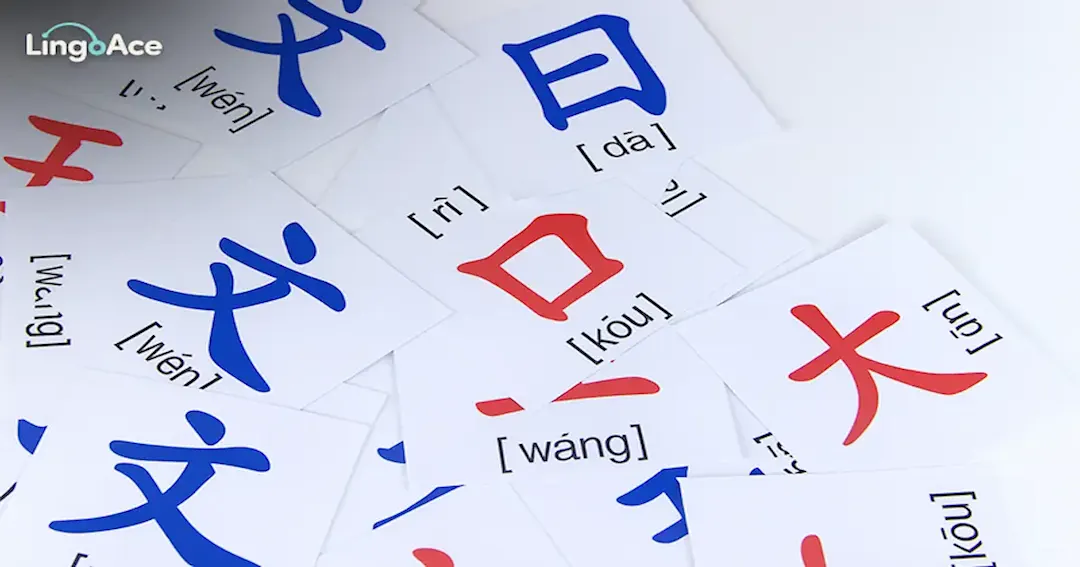
Flashcards, word games, and storytelling
Listening to Chinese songs or short podcasts
Greeting family and friends in Chinese
Using language apps for repetition and recall
Consistency is key. Just 10 minutes a day of immersive exposure can help children gain confidence and long-term mastery.
Why Start Your Child’s Chinese Learning Journey with LingoAce?
Starting with Chinese words for beginners helps children develop both language skills and cultural understanding from an early age, making the learning process more meaningful and enjoyable. Whether it’s learning daily expressions or mastering essential vocabulary, the key lies in consistent, enjoyable practice that keeps motivation high.
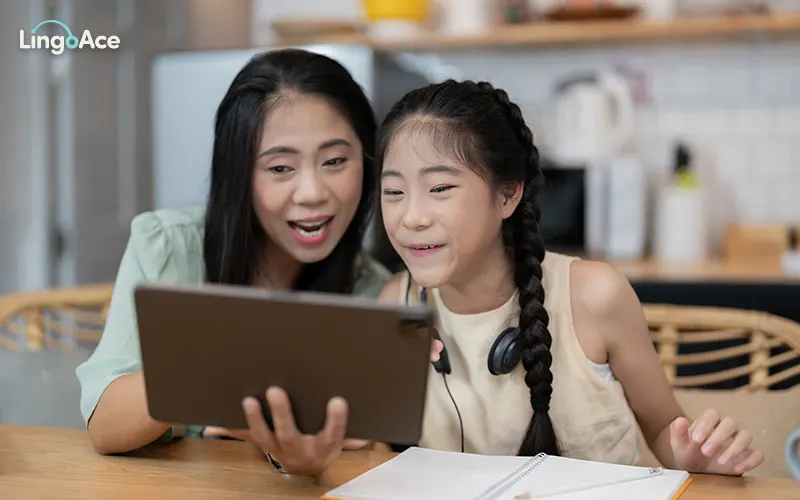
At LingoAce, children learn Chinese online from certified Chinese tutors who provide high-quality, research-backed instruction grounded in proven pedagogy. Each lesson is designed to be engaging, effective, and tailored to the child’s learning pace. Simultaneously, parents enjoy the convenience of personalised support that makes managing lessons effortless.
Contact us and let us make your child’s Chinese learning journey engaging and rewarding.